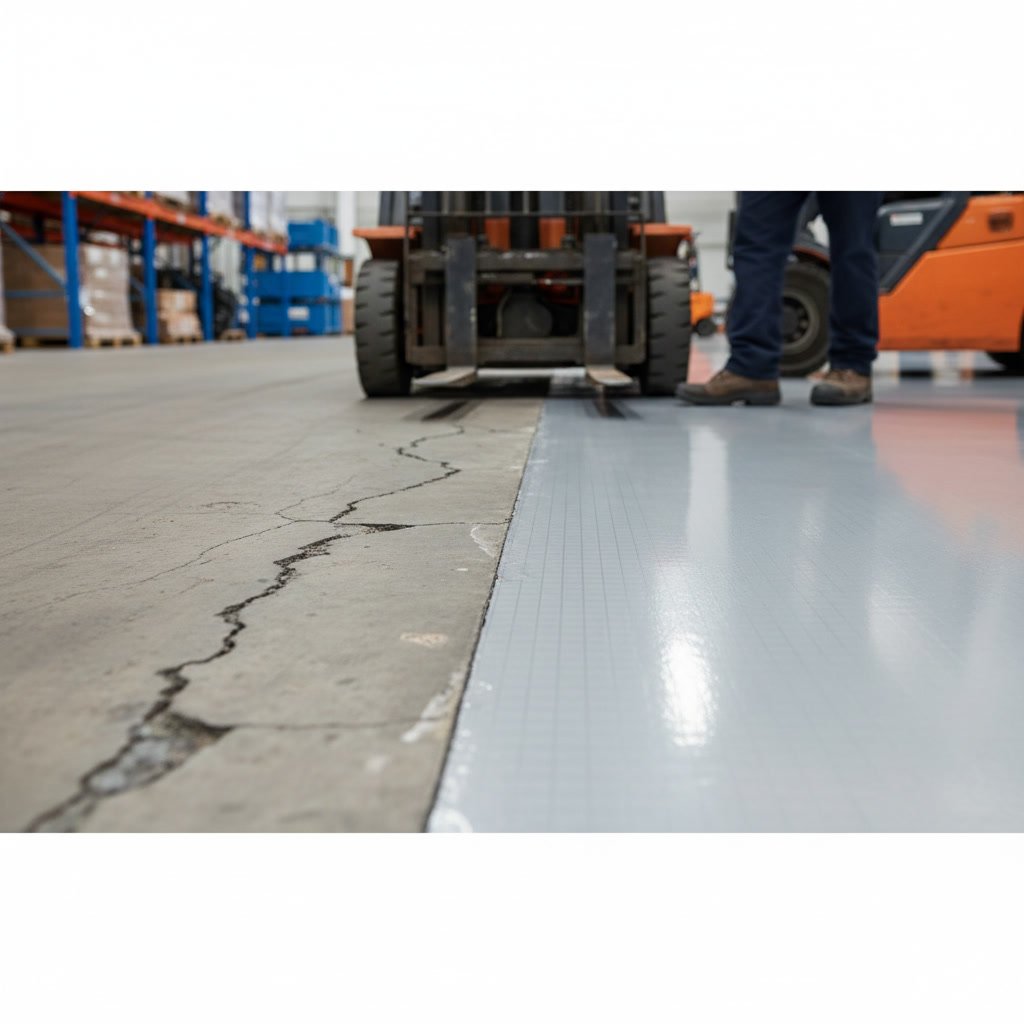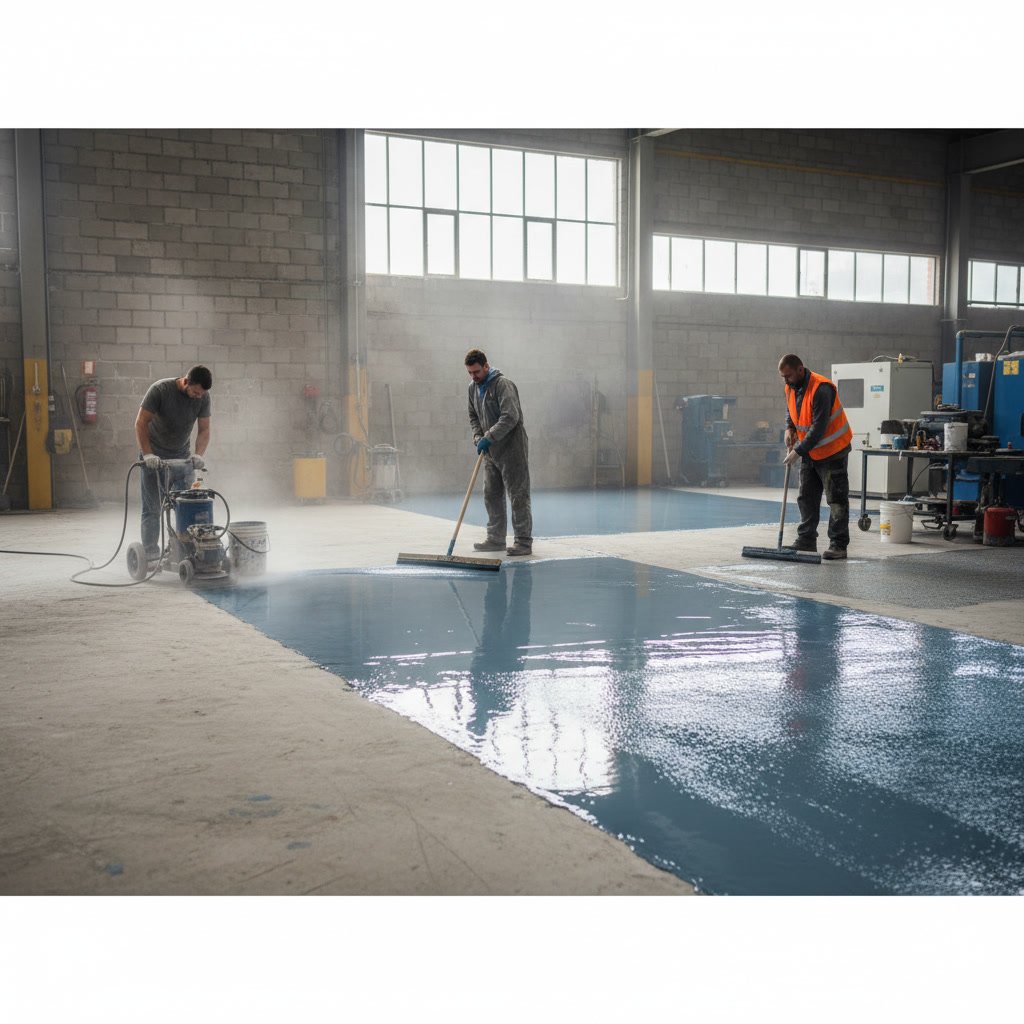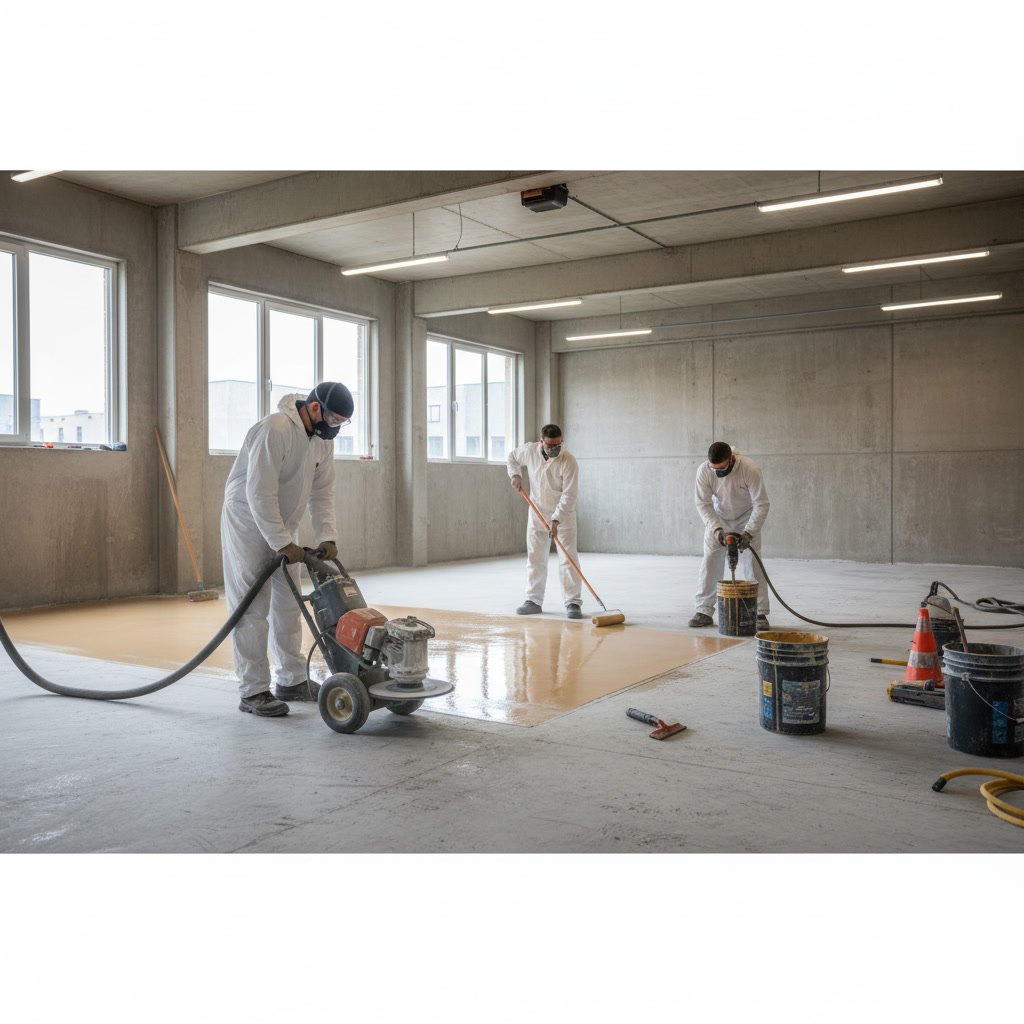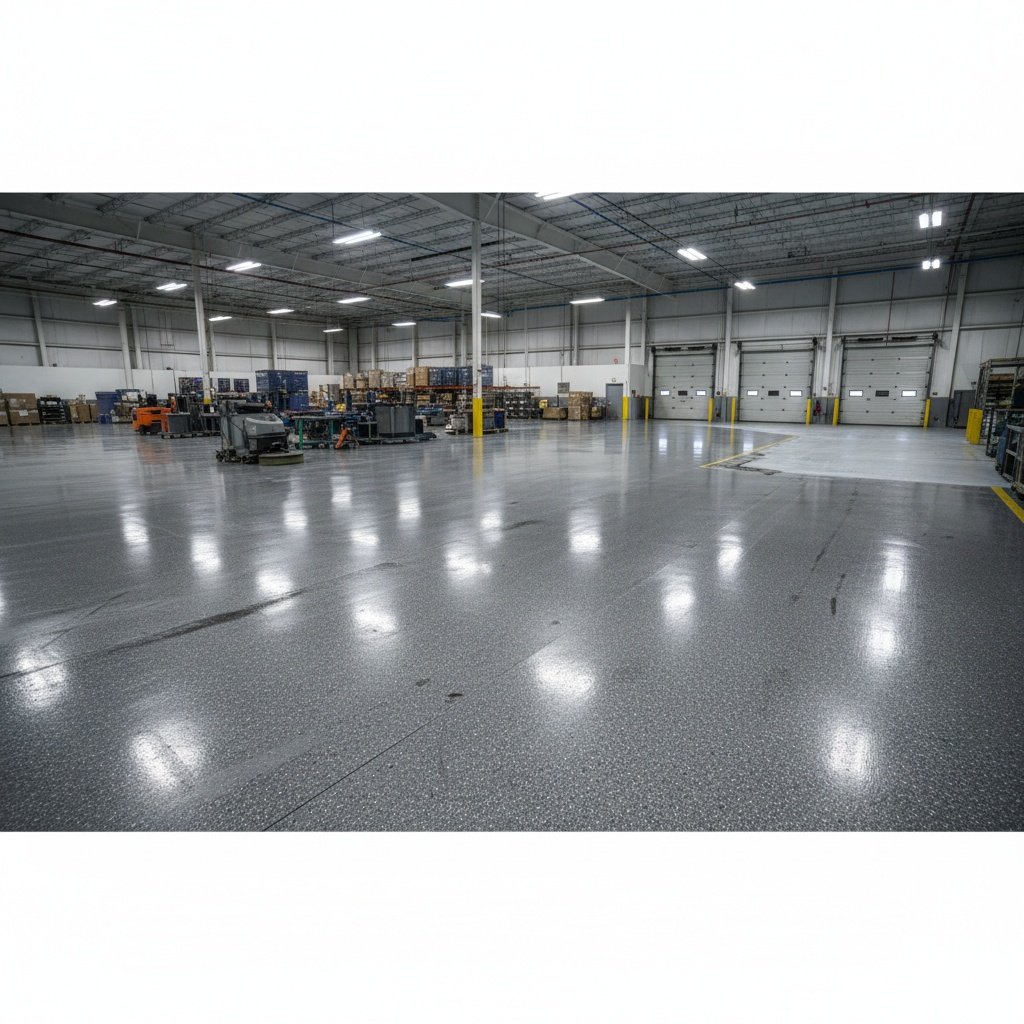
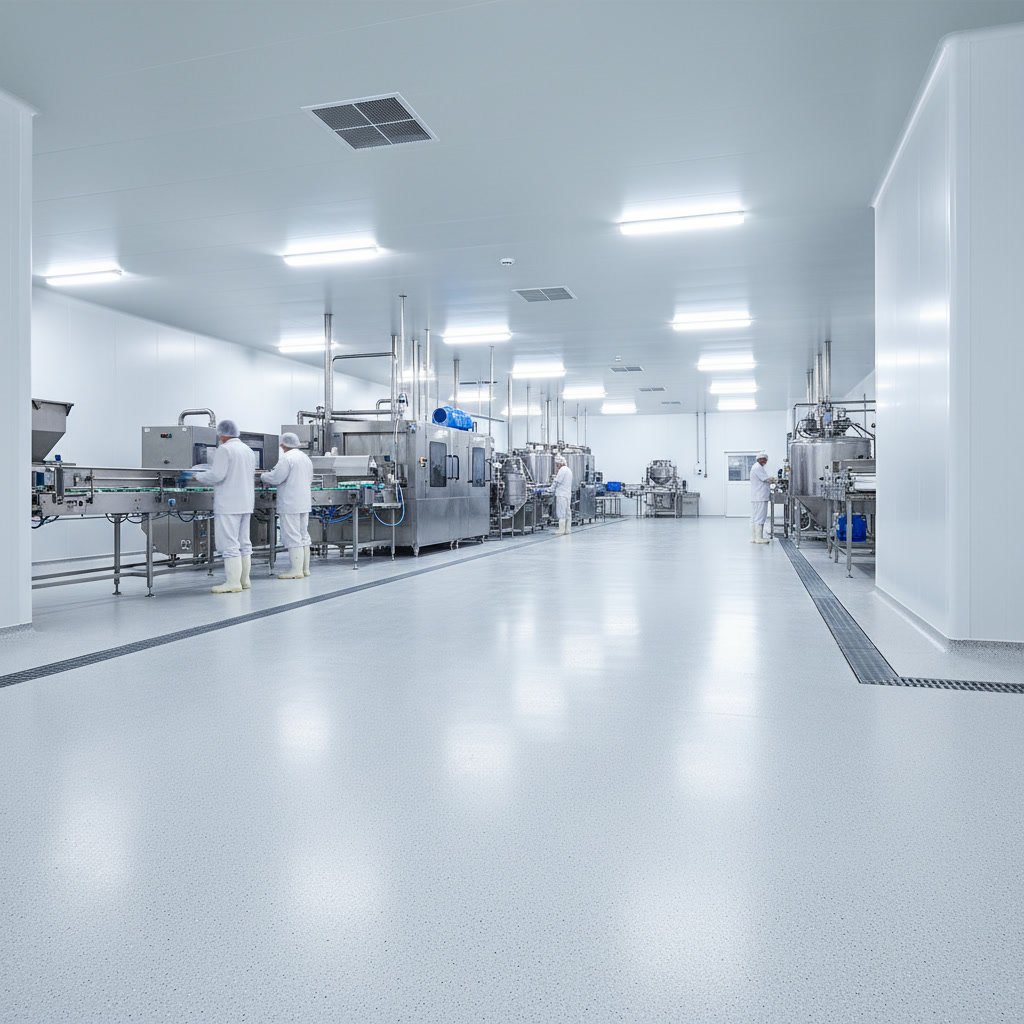
Restaurant kitchens and food processing plants destroy ordinary floors. Hot oil spills, freezer room temperatures swinging 100 degrees, daily power washing with caustic chemicals, and health inspectors demanding seamless, sanitary surfaces. Your commercial kitchen epoxy needs to handle all of this while meeting USDA and FDA regulations. The wrong flooring system will crack, peel, or harbor bacteria within months, putting your operation at risk.
This guide walks you through the best flooring systems for commercial kitchens and food processing facilities, from entry-level epoxy to industrial-grade urethane cement. You’ll learn which coatings meet health codes, how to handle thermal shock zones, and what actually works in high-traffic prep areas.
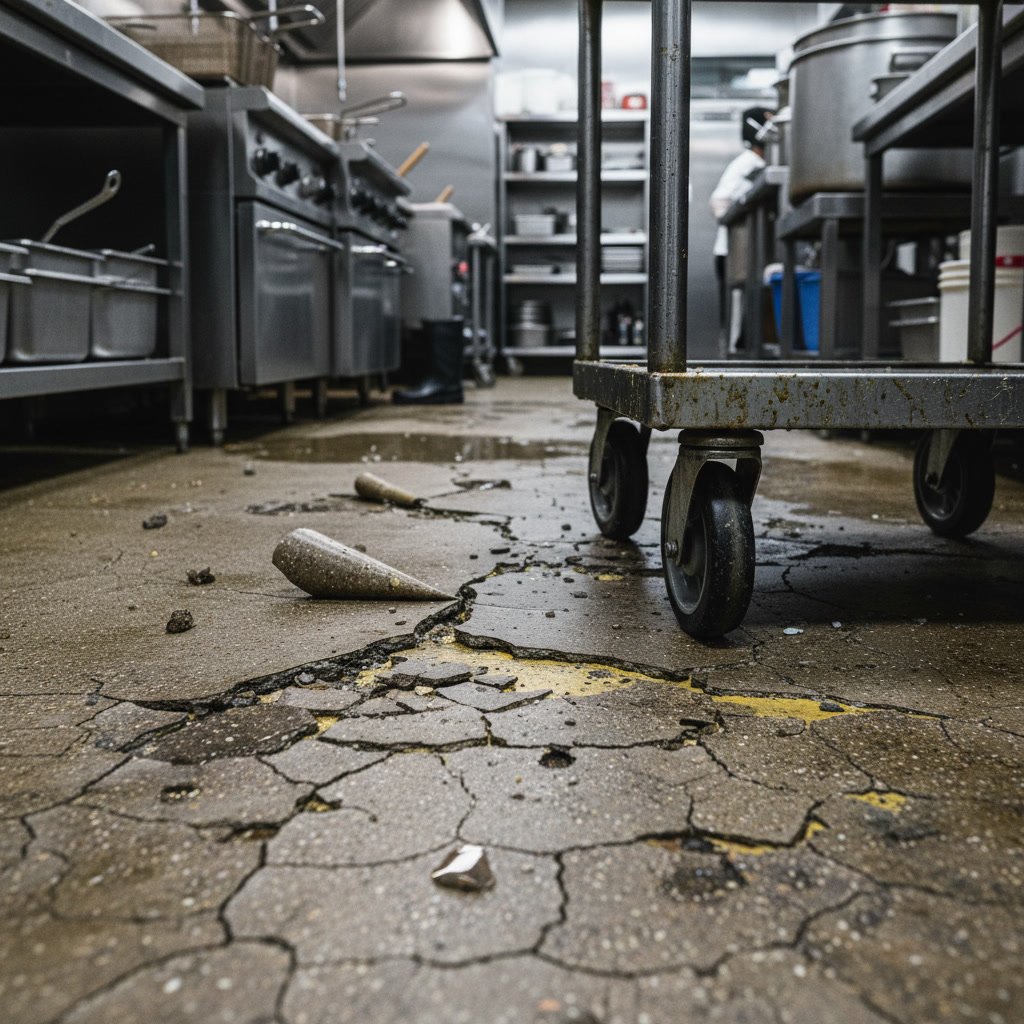
Why Standard Epoxy Fails in Commercial Kitchens
Basic garage-grade epoxy cannot survive commercial food environments. Most DIY epoxies are designed for light foot traffic and occasional chemical exposure, not the conditions found in professional kitchens.
Commercial kitchens expose floors to thermal shock daily. When you pour boiling water or hot grease onto a floor that was just hosed down with cold water, weaker coatings crack. Standard epoxy typically fails at temperature differentials above 40 degrees.
Acids and alkalis attack the coating surface. Vinegar, citrus cleaners, bleach, and industrial degreasers break down inferior epoxy bonds. Food processing facilities using stronger chemicals for sanitation need coatings specifically formulated for chemical resistance.
Health departments require floors that prevent bacterial growth. Any crack, pit, or porous surface becomes a contamination risk. Your commercial kitchen epoxy must create a completely sealed, non-porous surface with no places for bacteria to hide.
Top Flooring Systems for Commercial Kitchens
Different kitchen zones need different flooring solutions. A dry storage area has completely different requirements than a dish washing station or walk-in freezer threshold.
Urethane Cement Systems
Urethane cement stands as the gold standard for commercial kitchens and food processing plants. This system combines cement aggregate with urethane resin to create floors that handle extreme temperatures, heavy impacts, and aggressive chemicals.
These floors withstand temperatures from -40°F in freezers to 250°F near ovens and fryers. The thermal shock resistance prevents cracking when you transition from hot to cold repeatedly. Thickness ranges from 1/4 inch to 3/8 inch depending on traffic levels.
Urethane cement meets USDA requirements for meat and poultry facilities. The slip-resistant texture provides traction even when wet, reducing workplace injuries. Installation takes three to five days with a seven-day cure before full use.
The main drawback is cost. Urethane cement runs $8 to $15 per square foot installed, roughly double the price of epoxy systems. For facilities processing raw meat, dairy, or operating 24/7, the investment pays off in durability and compliance.
High-Performance Epoxy with Urethane Topcoat
This two-layer system gives you epoxy’s strong bond and chemical resistance with urethane’s flexibility and UV stability. The epoxy base coat seals the concrete while the urethane topcoat handles daily abuse.
The urethane topcoat resists yellowing from cleaning chemicals and maintains its appearance longer than epoxy alone. It handles moderate thermal shock better than standard epoxy, making it suitable for most restaurant kitchens outside extreme temperature zones.
Installation requires proper timing between coats. The epoxy must cure to a specific hardness before applying urethane, or delamination occurs. Professional installation ensures proper adhesion between layers.
This system costs $5 to $9 per square foot installed. It works well for bakeries, prep kitchens, serving areas, and restaurants without extreme temperature exposure.
Polyaspartic and Polyurea Coatings
Fast-cure polyaspartic and polyurea coatings allow same-day or next-day use in some applications. These systems cure quickly even in cold or humid conditions, minimizing kitchen downtime during installation.
Polyaspartic coatings offer excellent chemical resistance and maintain clarity better than epoxy. They resist hot tire pickup in loading dock areas where forklifts move between temperature zones. The fast cure time reduces installation to one or two days.
These coatings work best over properly prepared concrete as thin topcoats rather than thick build systems. They excel in cafeterias, break rooms, and light food service areas. For heavy-duty processing plants, they serve better as topcoats over epoxy base layers.
Cost ranges from $6 to $11 per square foot depending on system thickness and preparation requirements.
Critical Features for Food Service Floors
Health codes and daily operations demand specific flooring characteristics. Your commercial kitchen epoxy system must include these features to pass inspection and survive daily use.
Seamless Cove Base Installation
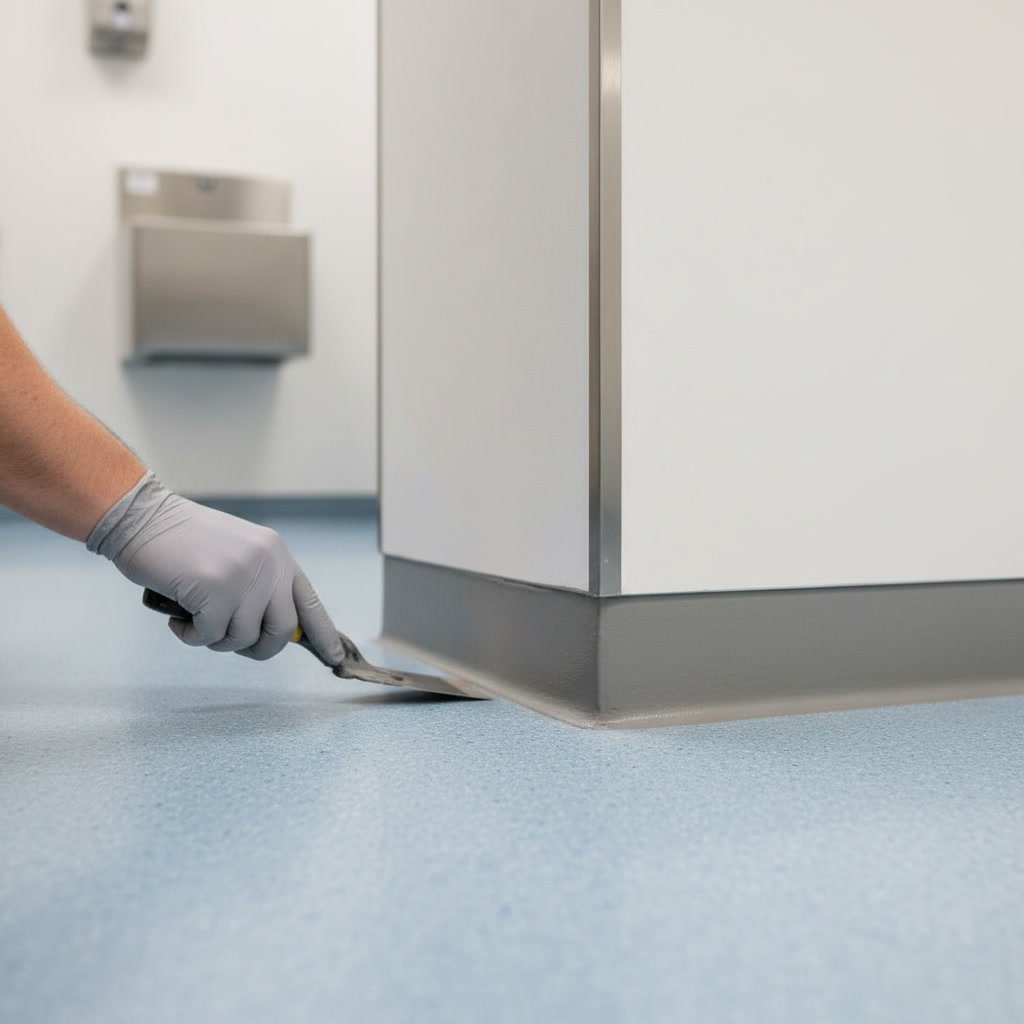
Cove base eliminates the floor-to-wall joint where bacteria accumulates. The flooring material curves up the wall four to six inches, creating a continuous, sealed surface with no 90-degree corners.
Health inspectors specifically look for proper cove base in commercial kitchens and food processing areas. Without it, you cannot properly sanitize the wall-floor junction. Moisture seeps behind traditional baseboards, creating mold and bacterial growth.
Professional installers form cove base using the same urethane cement or epoxy as the floor. This creates a monolithic surface with no seams. Radius should be at least 1/2 inch for easy cleaning.
Chemical and Slip Resistance
Your floor must resist the specific chemicals used in your facility. Provide your flooring contractor with a list of all cleaning products, including concentrations. Some degreasers attack even high-quality epoxies if the formulation isn’t matched correctly.
Slip resistance protects workers in constantly wet environments. Broadcast quartz or aluminum oxide into the topcoat creates texture. For areas with standing water, specify an aggregate size that provides NFSI High Traction certification.
Balance slip resistance with cleanability. Extremely rough textures trap food particles and become harder to sanitize. Medium-grade aggregates provide adequate traction while allowing proper cleaning.
Antimicrobial Additives
Some commercial kitchen epoxy systems incorporate antimicrobial agents directly into the coating. Silver ion technology inhibits bacterial growth on the surface between cleanings.
These additives do not replace proper sanitation procedures. They provide an extra layer of protection during busy service periods when floors cannot be immediately cleaned. The EPA regulates antimicrobial claims, so verify any products meet federal standards.
Antimicrobial coatings cost an additional $0.50 to $1.50 per square foot. They make sense for high-risk areas like raw meat processing, but may be unnecessary in dry storage or serving areas.
Preparation Requirements for Long-Lasting Results
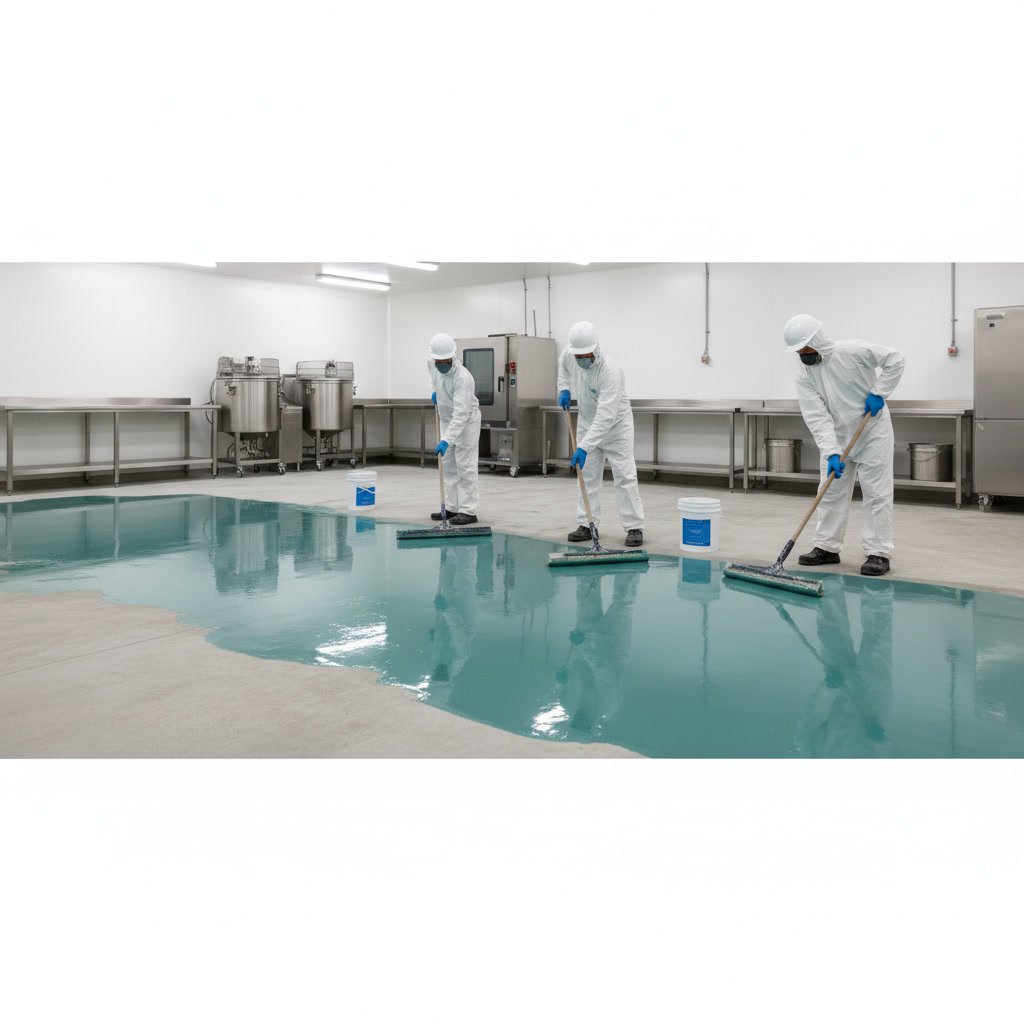
Surface preparation determines whether your flooring system lasts three years or 15 years. Shortcuts during prep cause 90% of commercial flooring failures.
Concrete must be ground to expose a clean, porous surface. This removes any existing coatings, grease penetration, and weak concrete layers. Professional contractors use diamond grinding equipment to achieve proper concrete surface profile (CSP).
Most commercial kitchen epoxy systems require CSP 3 or CSP 4. This creates visible aggregate exposure with a texture similar to 60-80 grit sandpaper. The profile allows mechanical bonding between concrete and coating.
Moisture testing prevents catastrophic failures. Concrete slabs release moisture vapor that can delaminate coatings. Calcium chloride tests or relative humidity probes measure moisture levels. Readings above 3 pounds per 1000 square feet require moisture mitigation before coating.
Crack repair and joint filling must happen before coating. Expansion joints get filled with flexible polyurea to prevent coating failure at joints. Cracks wider than 1/8 inch get routed and filled. Ignoring this step transfers stress directly to your new floor.
Temperature Zone Considerations
Different areas of food facilities experience vastly different conditions. A single flooring system rarely works throughout an entire plant.
Freezer and Cooler Areas
Freezer floors experience the most extreme conditions. Constant sub-zero temperatures make many coatings brittle. The transition zone where cold meets warm creates intense thermal shock.
Urethane cement handles freezer conditions best. Its flexibility at low temperatures prevents cracking. Install floors slightly thicker (3/8 inch minimum) in freezers to handle forklift traffic on rigid, cold concrete.
The critical zone is the first three to six feet outside freezer doors. This area sees temperature swings of 100 degrees or more. Specify high-flexibility systems with excellent thermal shock resistance for these transitions.
Cooking and Frying Stations
Areas around ovens, fryers, and steam equipment stay consistently hot. Floors here must resist not just heat but also grease and oil that breaks down many coatings.
High-temperature epoxies rated to 200°F work in most cooking areas. For environments regularly exceeding this, urethane cement or specialized high-temp epoxies rated to 250°F become necessary.
Grease resistance matters as much as heat resistance. Some epoxies soften when exposed to prolonged grease contact. Test any system against your specific cooking oils and fats before full installation.
Wash and Sanitation Zones
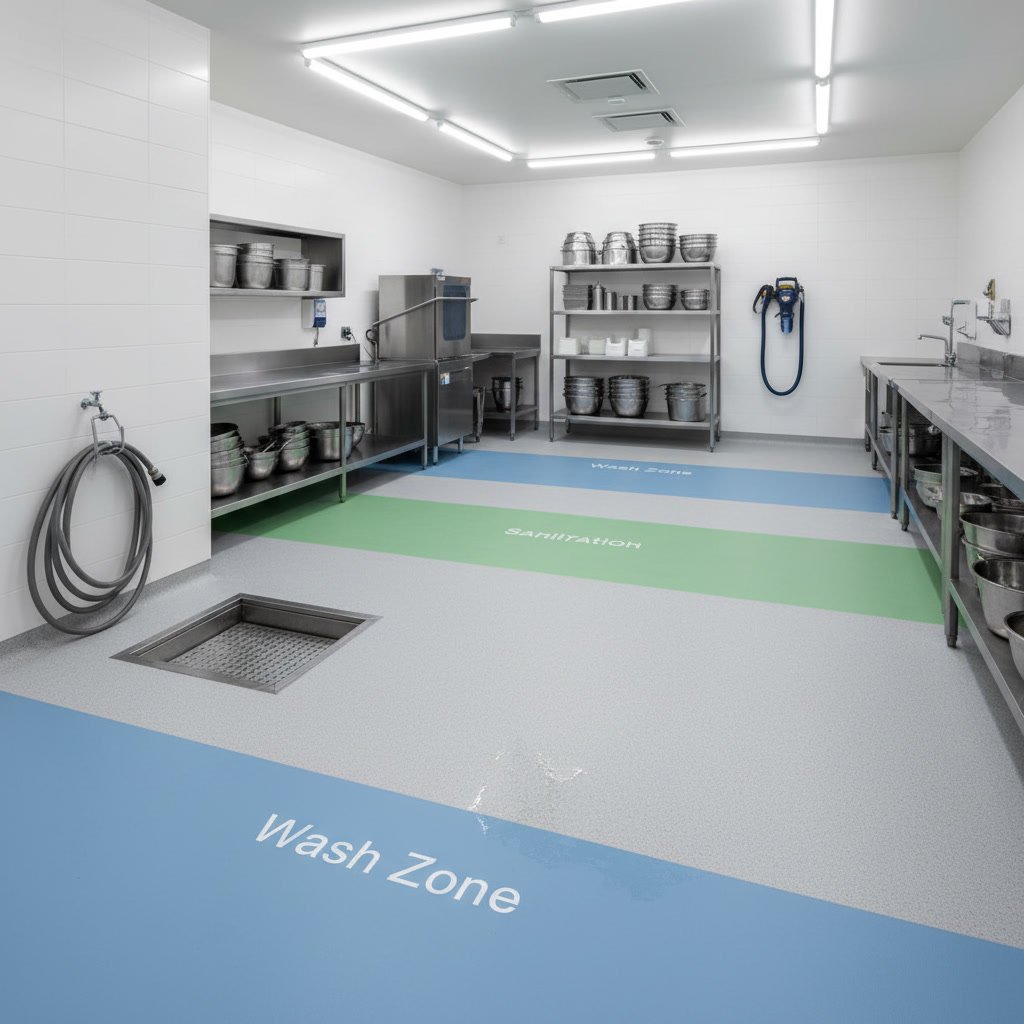
Dish rooms and cleaning stations stay constantly wet with exposure to the harshest chemicals. These areas often have drains requiring sloped floors for proper drainage.
Self-leveling epoxy systems create proper slopes to drains while maintaining smooth, sealed surfaces. The coating must resist alkaline detergents and sanitizers used in commercial dishwashers.
Proper drainage prevents standing water that creates slip hazards and bacterial growth. Floors should slope 1/4 inch per foot toward drains. Self-leveling systems make achieving consistent slopes easier than hand-troweled materials.
Maintenance and Longevity
Even the best commercial kitchen epoxy requires proper maintenance. Daily cleaning procedures affect floor lifespan dramatically.
Use pH-neutral cleaners for daily mopping unless your flooring system specifies otherwise. Harsh alkaline degreasers break down epoxy surfaces over time. Many facilities over-concentrate chemicals, using double or triple the recommended strength unnecessarily.
Scrubbing machines should use white or red pads for routine cleaning. Black pads are too aggressive and wear down the coating surface. Replace worn mop heads and scrubbing pads regularly to prevent dirt particles from abrading the floor.
Address spills immediately, especially grease and acids. While quality systems resist these materials, prolonged exposure still causes damage. Cooking oil left overnight penetrates microscopic imperfections and weakens the coating bond.
Plan for recoating every five to ten years depending on traffic. High-traffic areas wear down faster than storage rooms. Recoating involves light surface preparation and applying a fresh topcoat without full removal. This extends floor life by decades.
Pro Tip: Keep detailed records of which coating system was installed and when. This information helps contractors match products during repairs and ensures compatible materials during recoating. Many coating lines change formulations over time.
Costs and Installation Timeline
Budget and scheduling affect which system works for your facility. Understanding realistic costs and timelines prevents surprises during installation.
Basic epoxy systems start around $4 to $6 per square foot for areas with minimal preparation needs. Mid-range epoxy with urethane topcoat runs $5 to $9 per square foot. Premium urethane cement systems cost $8 to $15 per square foot depending on thickness and complexity.
These prices include surface preparation, materials, and installation by professional contractors. Additional costs arise from extensive crack repair, moisture mitigation, or removing old coatings. Facilities operating 24/7 pay premium rates for night or weekend installation.
Installation timelines vary by system. Fast-cure polyaspartic allows return to service in 24 hours. Standard epoxy systems need three to four days. Urethane cement requires five to seven days before full use. Plan for longer cure times in cold weather or high humidity.
Most commercial kitchens cannot shut down for a week. Contractors phase installation in sections, allowing partial operation during installation. This adds time but keeps your business running.
Choosing the Right Contractor
Commercial kitchen flooring requires specialized knowledge beyond residential garage floors. Not every epoxy installer understands food service requirements and health code compliance.
Ask potential contractors for references from similar facilities. A company with retail store experience may not understand USDA requirements for meat processing. Request photos of completed commercial kitchens and contact information for previous clients.
Verify the contractor carries proper insurance. Commercial general liability should be at least $2 million. Ask about product warranties and workmanship guarantees. Quality contractors stand behind their installations with multi-year warranties.
Discuss your specific chemicals and temperature conditions upfront. A knowledgeable contractor asks about your operations before recommending systems. Anyone pushing a single solution for all situations lacks the expertise needed for commercial food environments.
Alliance Epoxy Flooring Corp specializes in commercial kitchen installations throughout Manhattan, Long Island, New Jersey, and Southeast Pennsylvania. Their experience with food processing facilities and restaurant kitchens ensures installations meet both operational needs and health department requirements.
Frequently Asked Questions
How long does commercial kitchen epoxy last before needing replacement?
Quality commercial kitchen epoxy systems last 10 to 20 years with proper maintenance and periodic recoating. Urethane cement floors often exceed 20 years in food processing environments. High-traffic areas may need topcoat renewal every five to seven years, but the base system remains intact.
Can you install epoxy flooring over existing kitchen tile?
Installing over tile is possible but not recommended for commercial kitchens. The tile adds an unnecessary failure point since the coating only bonds to the tile surface, not the concrete underneath. Proper installations require tile removal and concrete preparation to ensure long-term adhesion and meet health codes requiring monolithic, sealed floors.
What is the minimum temperature for installing commercial kitchen epoxy?
Most epoxy systems require substrate temperatures above 50°F during application and curing. Some specialized winter-grade epoxies work down to 35°F. Temperature affects cure speed and final properties, so installations during cold weather need climate control or specialized products designed for low-temperature application.
Does commercial kitchen flooring meet FDA and USDA requirements?
Properly specified systems meet FDA and USDA requirements for food processing facilities. The key requirements include seamless installation, chemical resistance, ease of cleaning, and impermeability to bacteria. Your contractor should be familiar with these regulations and provide documentation that materials comply with federal food safety standards.
How soon can you resume kitchen operations after epoxy installation?
Return-to-service time depends on the system used. Fast-cure polyaspartic allows light foot traffic in four to six hours and full use in 24 hours. Standard epoxy needs 24 hours for foot traffic and 72 hours for full operations. Urethane cement requires three days for foot traffic and seven days before heavy equipment and full operations resume.
Moving Forward with Your Kitchen Floor Project
The right commercial kitchen epoxy system protects your investment, ensures health code compliance, and reduces long-term maintenance costs. Urethane cement delivers maximum durability for heavy-use processing plants, while epoxy with urethane topcoat serves most restaurant kitchens effectively. System selection depends on your specific temperature exposures, chemical use, and budget constraints.
Professional installation with proper surface preparation determines whether your floor lasts three years or 20 years. Cutting corners during prep or choosing inexperienced contractors leads to premature failures and expensive repairs.
Alliance Epoxy Flooring Corp provides commercial kitchen flooring solutions for restaurants and food processing facilities throughout New York, New Jersey, and Pennsylvania. Their team understands the unique demands of food service environments and health department requirements. Contact them at +18005189080 to discuss your commercial kitchen flooring needs and schedule a site evaluation.