New Jersey winters are brutal on garage floors and driveways. Road salt, freeze-thaw cycles, and UV exposure from summer sun create a punishing combination that destroys unprotected concrete. Traditional coatings crack, peel, or yellow within a few years. If you need a floor coating that can handle the extremes of the Garden State climate while looking great year-round, polyaspartic floor coating delivers where other options fall short.
This guide breaks down why polyaspartic coatings have become the go-to choice for residential garages and driveways across New Jersey, what makes them different from epoxy, and how to select the right system for your specific needs.
What Makes Polyaspartic Coatings Different
Polyaspartic floor coating is a type of aliphatic polyurea that cures extremely fast and provides superior UV resistance compared to traditional epoxy systems. While epoxy has been the standard for decades, polyaspartic technology offers several critical advantages for outdoor and garage applications.
The chemistry behind polyaspartic coatings allows them to cure in temperatures as low as 20 degrees Fahrenheit and as high as 140 degrees. This wide application window means installers can apply the coating in early spring or late fall when epoxy would fail to cure properly. For New Jersey homeowners, this flexibility translates to more convenient scheduling and faster project completion.
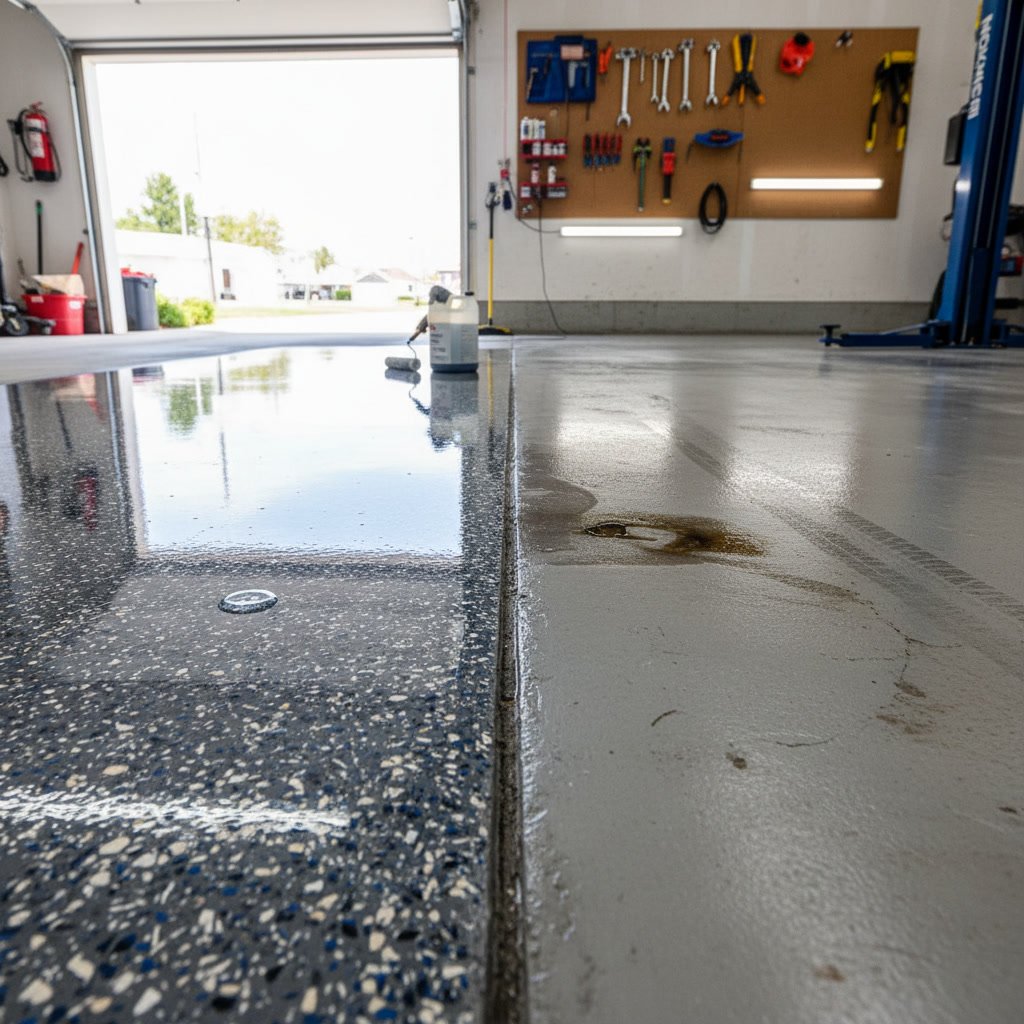
Unlike epoxy, which tends to yellow when exposed to direct sunlight, polyaspartic coatings maintain their color and clarity indefinitely. This UV stability makes them ideal for driveways and garage floors where sunlight streams through windows or open doors. The coating forms a dense, non-porous surface that resists oil stains, hot tire pickup, and chemical damage from road salt.
Performance in New Jersey Climate Conditions
New Jersey experiences temperature swings from below zero in January to above 95 degrees in July. Your garage floor and driveway need to expand and contract with these changes without cracking or delaminating. Polyaspartic coatings offer exceptional flexibility and tensile strength that accommodate this thermal movement.
When snow melts off your car and refreezes overnight, the resulting moisture can penetrate weak coatings and cause spalling. Polyaspartic creates a waterproof barrier that prevents moisture intrusion at the molecular level. This protection is particularly important in coastal areas of New Jersey where humidity and salt air accelerate concrete degradation.
The coating’s abrasion resistance stands up to snow shovels, tire chains, and the constant traffic of vehicles entering and exiting your garage. Independent testing shows polyaspartic coatings can be four times more abrasion-resistant than epoxy, which directly translates to longer service life in high-traffic areas.
Road Salt and Chemical Resistance
New Jersey roads get heavy applications of calcium chloride and sodium chloride during winter storms. When your vehicle brings this corrosive mixture into your garage, it pools on the floor and attacks unprotected concrete. Polyaspartic coatings resist these chemicals without etching, dulling, or breaking down.
The chemical resistance extends to automotive fluids like motor oil, transmission fluid, brake fluid, and antifreeze. Spills wipe clean without leaving permanent stains, keeping your garage floor looking new even after years of use.
Installation Speed and Cure Time Advantages
One of the most significant benefits of polyaspartic technology is the rapid cure time. Most residential garage floors can be fully coated and ready for vehicle traffic within 24 hours. Compare this to traditional epoxy systems that require three to five days of cure time before you can park on them.
This speed matters when you need your garage back in service quickly. Alliance Epoxy Flooring Corp offers a One Day System that leverages polyaspartic technology to complete most residential projects in a single day, from surface preparation through final topcoat.
The fast cure also reduces the window where dust, debris, or insects can contaminate the wet coating. In busy neighborhoods, this minimizes the risk of imperfections and ensures a smoother final finish.
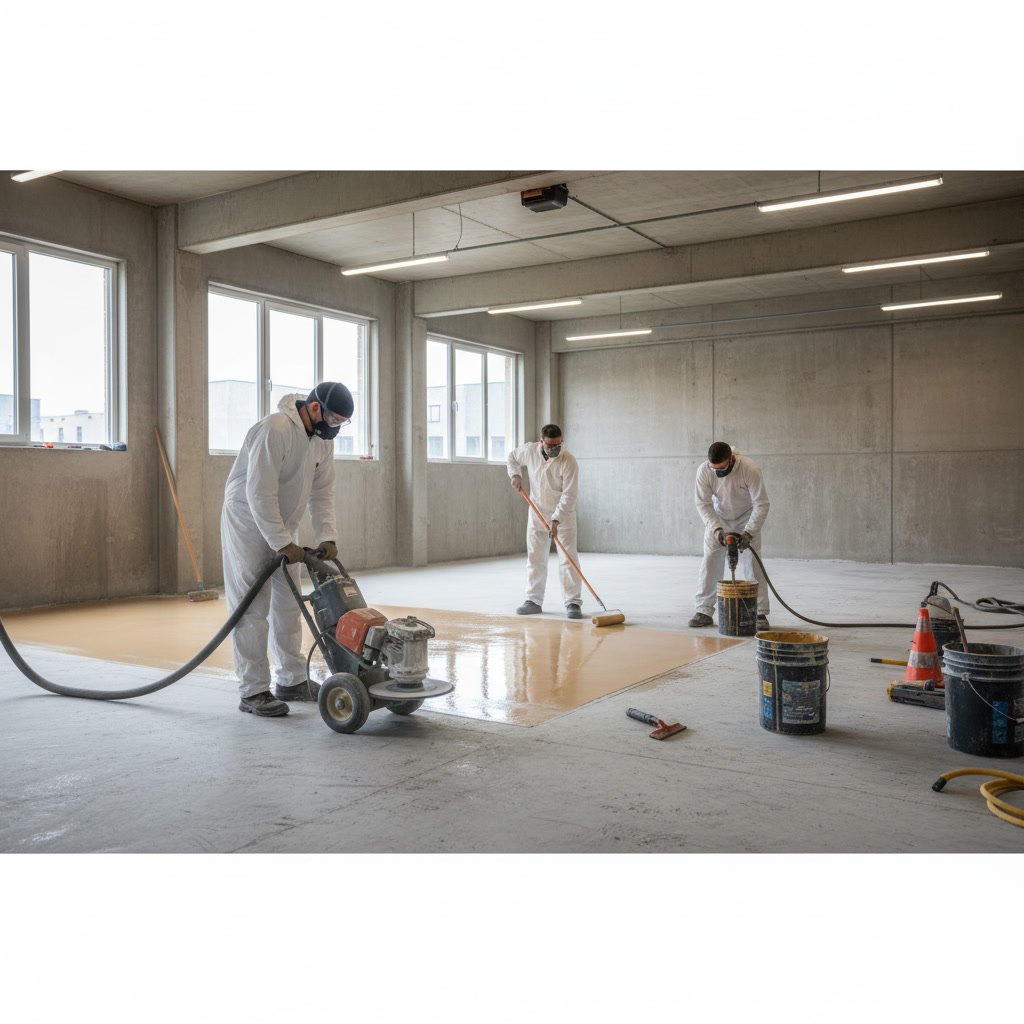
Pro Tip: Even though polyaspartic cures quickly, proper concrete preparation remains critical. The substrate must be clean, dry, and profiled correctly, or even the best coating will fail. Professional surface prep accounts for at least half the success of any coating project.
Comparing Polyaspartic to Epoxy and Other Coating Options
Understanding how polyaspartic stacks up against other coating technologies helps you make an informed decision for your garage or driveway project. Each system has specific strengths and limitations.
Polyaspartic vs. Epoxy
Traditional epoxy coatings remain popular for indoor applications like basements and warehouses. Epoxy offers excellent adhesion and comes at a lower material cost than polyaspartic. However, epoxy yellows under UV exposure, requires longer cure times, and can only be applied within a narrow temperature range (typically 50 to 85 degrees).
Polyaspartic floor coating cures in one to two hours compared to epoxy’s 24 to 72-hour cure window. This speed reduces project downtime and allows for multiple coats in a single day. The UV stability of polyaspartic makes it the clear winner for any application with sunlight exposure.
Polyaspartic vs. Polyurea
Polyurea coatings cure even faster than polyaspartic systems, sometimes in just minutes. However, this extreme speed makes polyurea difficult to apply evenly without specialized spray equipment. Polyaspartic provides a better balance of workability and cure speed for residential applications.
Both polyaspartic and polyurea offer superior chemical resistance and flexibility compared to epoxy. For most homeowners, polyaspartic represents the sweet spot of performance, cost, and application ease.
Decorative Options
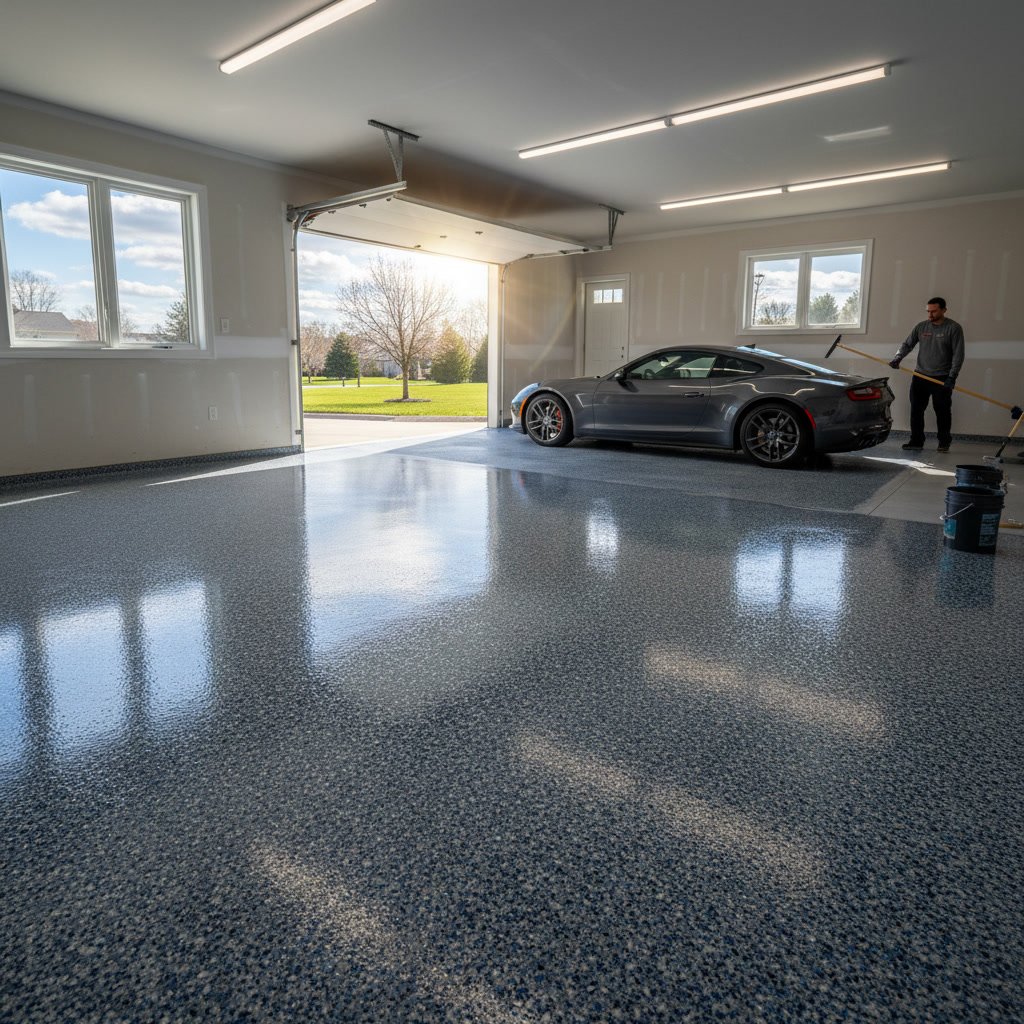
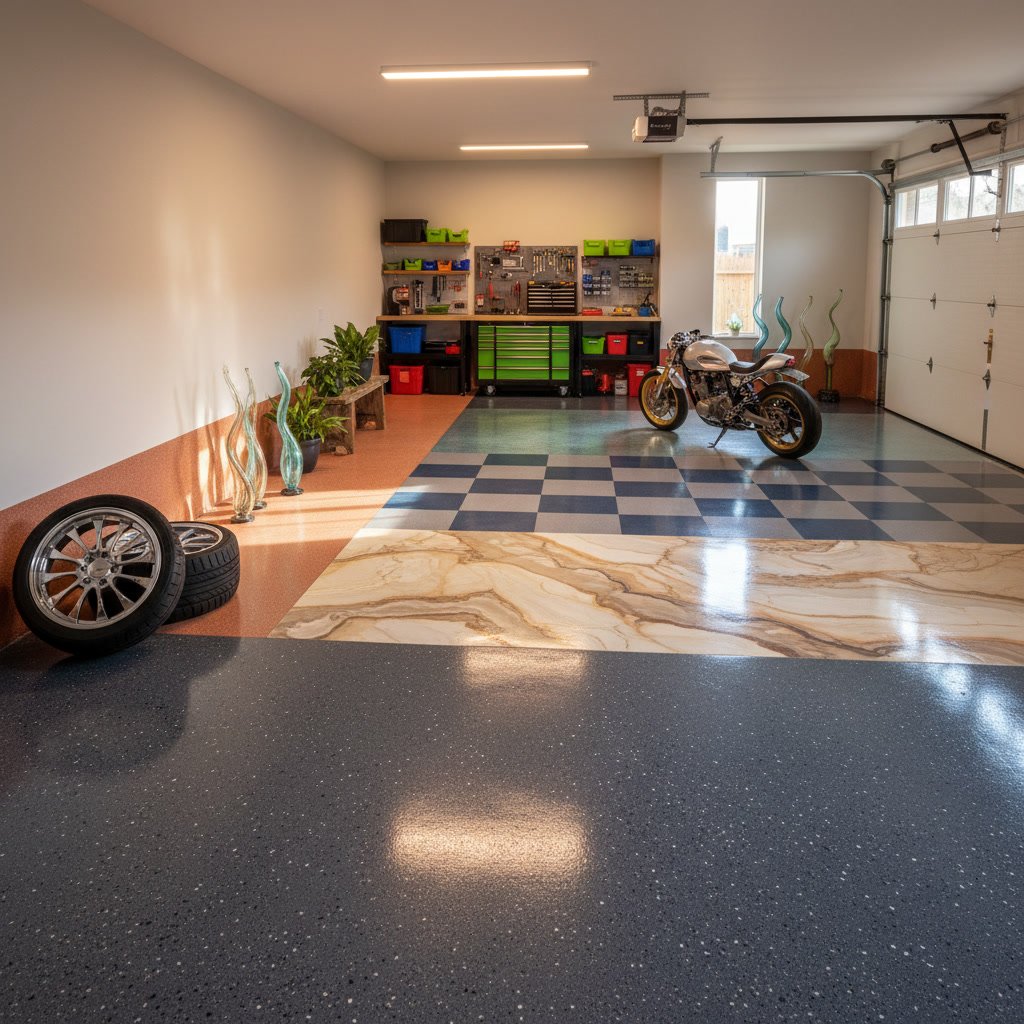
Polyaspartic coatings accept decorative flakes, quartz aggregates, and metallic pigments just like epoxy systems. You can achieve the popular flake and quartz coating look with all the performance benefits of polyaspartic technology. The clear topcoat enhances the depth and vibrancy of decorative elements while providing a high-gloss or satin finish depending on your preference.
Key Application Considerations for Garages and Driveways
Not all polyaspartic products are created equal. The formulation, mil thickness, and preparation methods all impact long-term performance. Here are the critical factors to evaluate when planning your project.
Substrate Condition and Preparation
Polyaspartic bonds incredibly well to properly prepared concrete but will fail on dusty, oily, or contaminated surfaces. The concrete must be profiled to at least a CSP-2 (Concrete Surface Profile) using diamond grinding or acid etching. Old sealers, paint, or previous coatings must be completely removed.
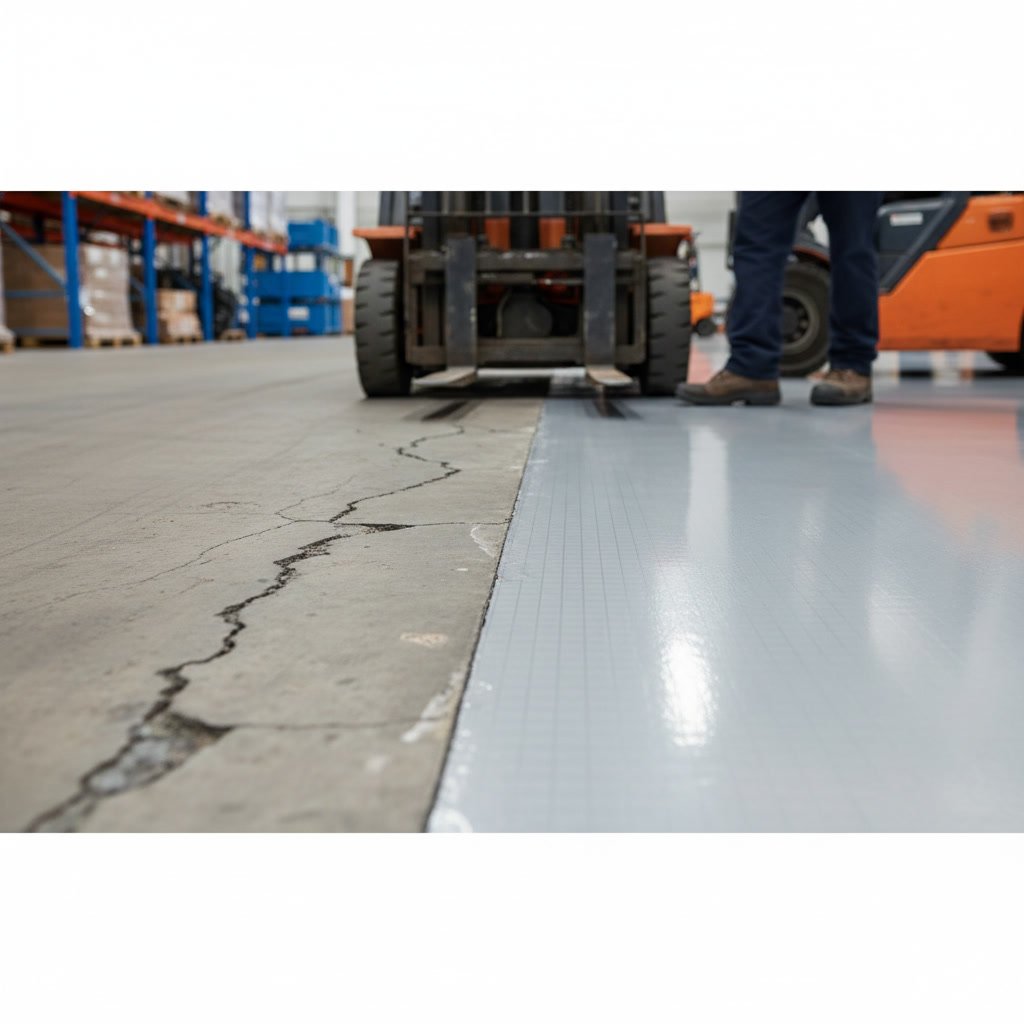
For driveways with existing damage, cracks wider than one-eighth inch should be routed and filled before coating. Proper concrete floor preparation ensures the polyaspartic coating achieves maximum adhesion and service life.
Thickness and Build
Most residential polyaspartic systems apply at 10 to 20 mils wet thickness, which yields 8 to 16 mils dry. Thicker builds provide better impact resistance and longer wear life but increase material costs. For standard residential garages with normal use, a 10 to 12 mil system offers an excellent balance of performance and value.
High-traffic driveways or garages housing heavy vehicles may benefit from 15 to 20 mil builds. Some contractors apply a polyaspartic base coat with decorative flakes, then seal it with a urethane top coat for additional UV protection and scratch resistance.
Slip Resistance
Smooth polyaspartic coatings can become slippery when wet, which creates a safety hazard in garages and driveways. Proper slip resistance comes from adding texture to the final coat. Options include broadcasting fine silica sand, aluminum oxide, or using a textured roller during application.
The level of texture should match your needs. A light texture works for dry garages, while driveways and areas exposed to rain or snow require more aggressive texturing for safe footing.
Color and Finish Options
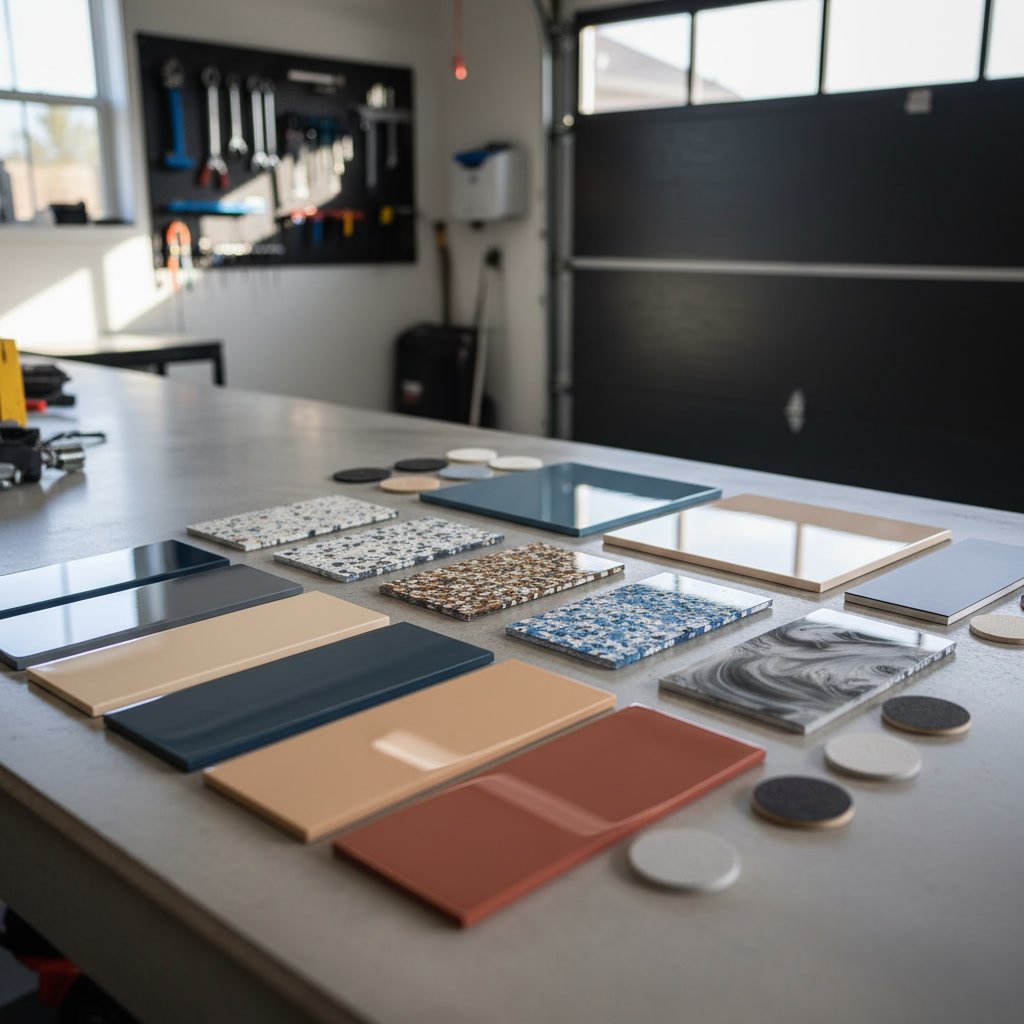
Polyaspartic coatings are available in virtually unlimited colors through custom tinting. Popular choices for New Jersey garages include neutral grays, tans, and beiges that hide dirt while complementing home exteriors. Darker colors show dust more readily but create dramatic contrast with decorative flakes.
Clear polyaspartic topcoats can be applied over concrete staining to preserve the natural look of the substrate while adding protection. This approach works well when you want to maintain the appearance of exposed aggregate or decorative concrete.
Gloss levels range from high-gloss (90-plus gloss units) to satin (40 to 60 gloss units) and matte (under 30 gloss units). High-gloss finishes maximize light reflection and make spaces feel larger but show imperfections more readily. Satin finishes offer a good middle ground for most residential applications.
Maintenance and Longevity
Properly installed polyaspartic floor coatings in New Jersey garages and driveways typically last 15 to 20 years with minimal maintenance. The non-porous surface prevents staining and makes cleaning simple. Regular sweeping and occasional mopping with a pH-neutral cleaner keep the floor looking new.
Avoid using harsh solvents, strong acids, or abrasive scrubbers that can dull the finish over time. For stubborn stains, a mild degreaser and soft bristle brush work effectively without damaging the coating.
Unlike cheaper garage floor paints that peel and require recoating every few years, polyaspartic systems maintain their integrity and appearance with virtually no upkeep beyond basic cleaning. This longevity makes them cost-effective over the life of your home.
Cost Factors and Value
Polyaspartic coatings cost more per square foot than basic epoxy systems, typically ranging from $6 to $12 per square foot installed for residential projects. The price varies based on substrate condition, decorative options, and mil thickness.
While the upfront investment exceeds paint or DIY epoxy kits, the extended lifespan and superior performance deliver better value over time. Factor in the cost of repeated recoating with inferior products, and polyaspartic often proves more economical across a 10 to 15-year timeline.
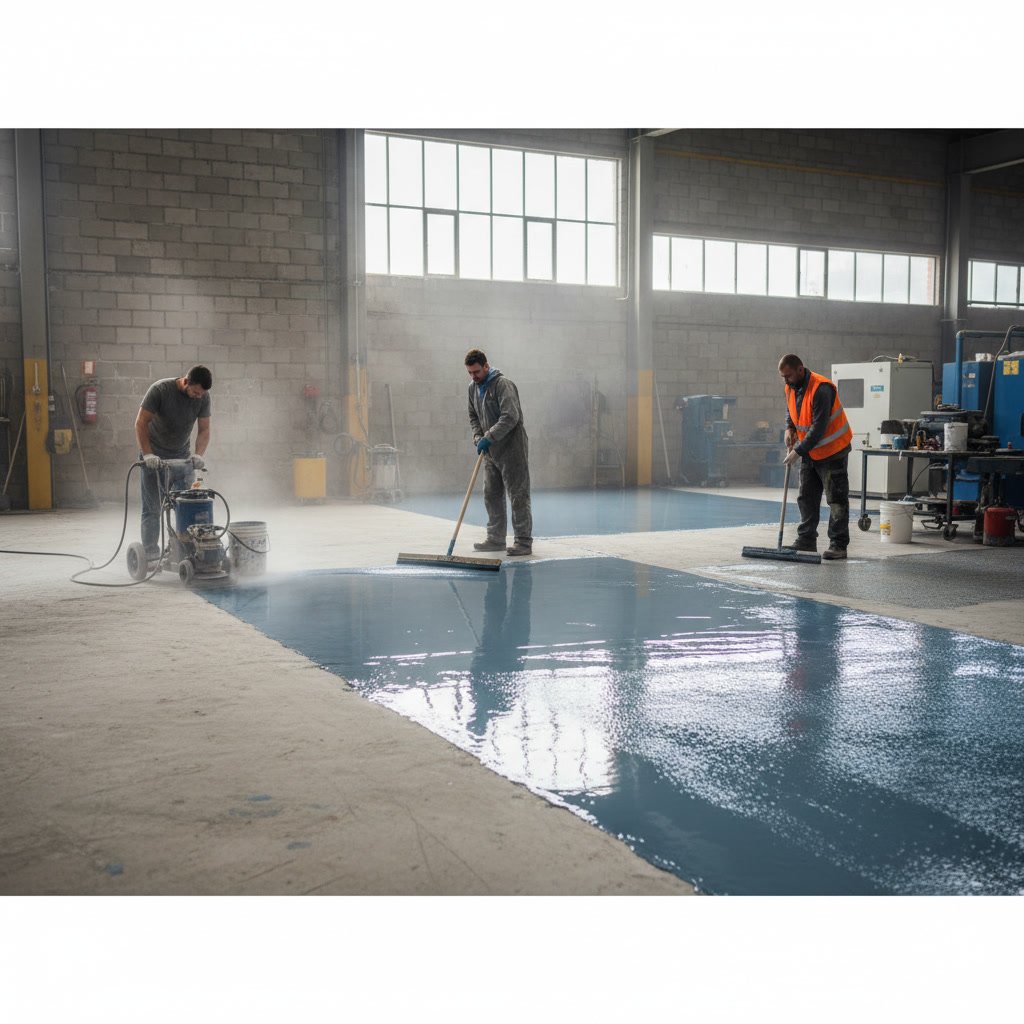
Professional installation ensures proper surface preparation, correct mixing ratios, and appropriate cure conditions. These factors dramatically impact long-term performance. Attempting to save money with DIY application typically results in premature failure and the expense of professional remediation.
Selecting a Qualified Contractor in New Jersey
The quality of installation matters as much as the coating itself. Look for contractors with specific experience applying polyaspartic systems, not just general epoxy work. Ask to see recent projects similar to yours and check references from customers in your area.
Qualified contractors conduct moisture testing on concrete slabs before coating to identify potential issues. They understand how temperature and humidity affect cure times and adjust their processes accordingly. Proper contractors also carry liability insurance and offer warranties on both materials and workmanship.
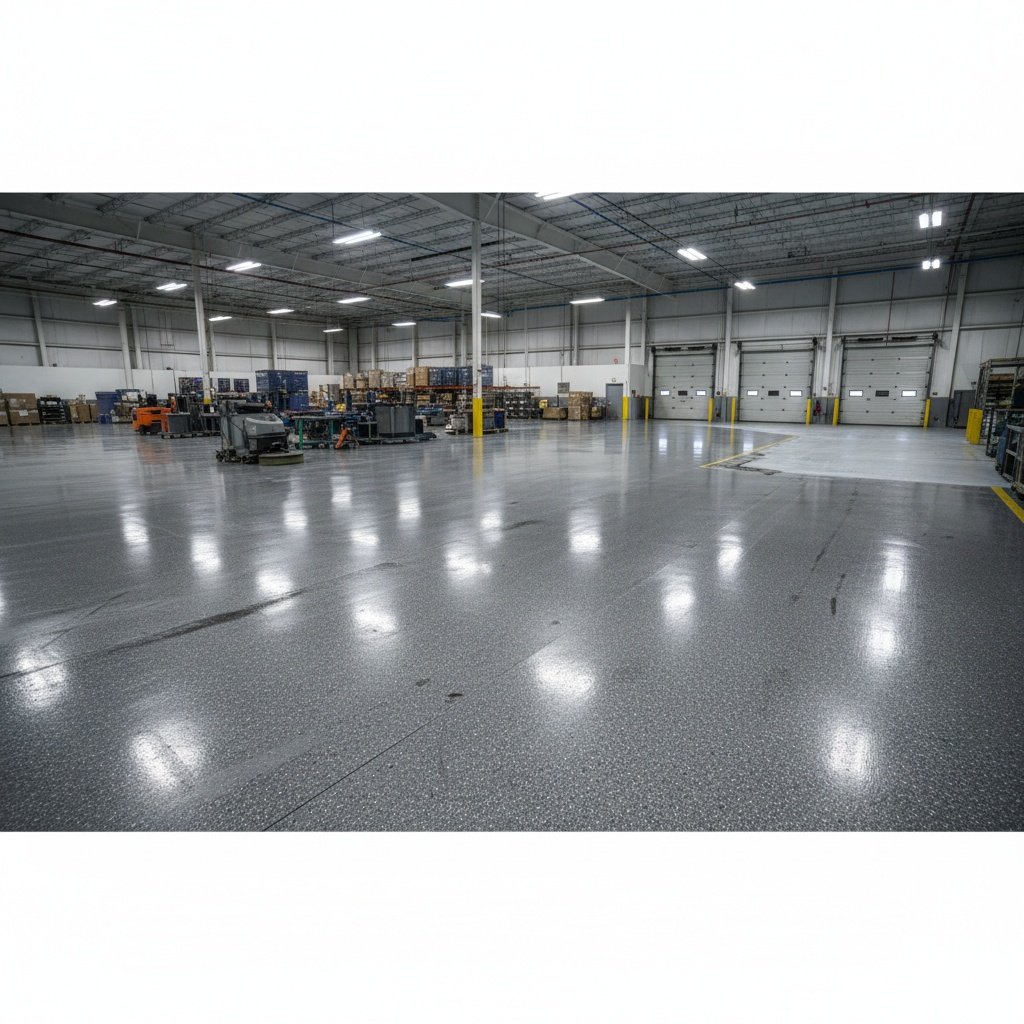
For industrial and commercial projects, consider reviewing our guide on types of industrial floor coatings for warehouses to understand how professional-grade systems differ from residential applications.
Frequently Asked Questions
How long does polyaspartic floor coating last on a garage floor?
A professionally installed polyaspartic coating on a residential garage floor typically lasts 15 to 20 years with proper maintenance. The actual lifespan depends on traffic levels, chemical exposure, and whether the substrate was properly prepared before coating. Commercial garages with heavy use may see 10 to 15 years of service life.
Can polyaspartic coating be applied in cold weather?
Yes, polyaspartic coatings can be applied in temperatures as low as 20 degrees Fahrenheit, making them ideal for year-round installation in New Jersey. However, the concrete substrate must be above freezing and completely dry. Cold temperatures slow cure times slightly but do not prevent proper adhesion like they do with epoxy.
Is polyaspartic coating slippery when wet?
Smooth polyaspartic coatings can be slippery when wet, but proper texturing during installation prevents this issue. Contractors add slip-resistant aggregates like aluminum oxide or apply textured rollers to create safe traction. The level of texture can be customized based on whether the floor will be exposed to moisture.
How does polyaspartic coating hold up to hot tires?
Polyaspartic floor coating resists hot tire pickup significantly better than epoxy. The coating’s high heat resistance and strong adhesion prevent softening and tearing when hot tires from summer driving contact the surface. This makes polyaspartic ideal for garage floors where vehicles park immediately after highway use.
Can you apply polyaspartic coating over existing epoxy?
In some cases, polyaspartic can be applied over well-adhered epoxy, but complete removal of the old coating typically provides better results. The existing epoxy must be thoroughly cleaned, lightly abraded, and tested for adhesion. If the old coating shows any signs of delamination or wear, complete removal and fresh application to bare concrete is recommended.
Making the Right Choice for Your Project
Polyaspartic floor coating offers New Jersey homeowners the best combination of durability, speed, and weather resistance for garage floors and driveways. The technology outperforms traditional epoxy in UV stability, cure time, and temperature tolerance while maintaining excellent chemical resistance and aesthetic options.
When you factor in the harsh climate conditions across New Jersey, from coastal humidity to northern mountain winters, the investment in a quality polyaspartic system pays dividends through reduced maintenance and extended service life. The coating protects your concrete investment while enhancing your property’s appearance and functionality.
Alliance Epoxy Flooring Corp has installed polyaspartic systems across residential and commercial properties throughout New Jersey, Manhattan, Long Island, and Southeastern Pennsylvania. Our team handles every aspect of the project, from concrete preparation through final sealing, ensuring your floor performs as intended for years to come. Contact us at +18005189080 to discuss your garage or driveway coating project and receive a detailed assessment of your specific needs.