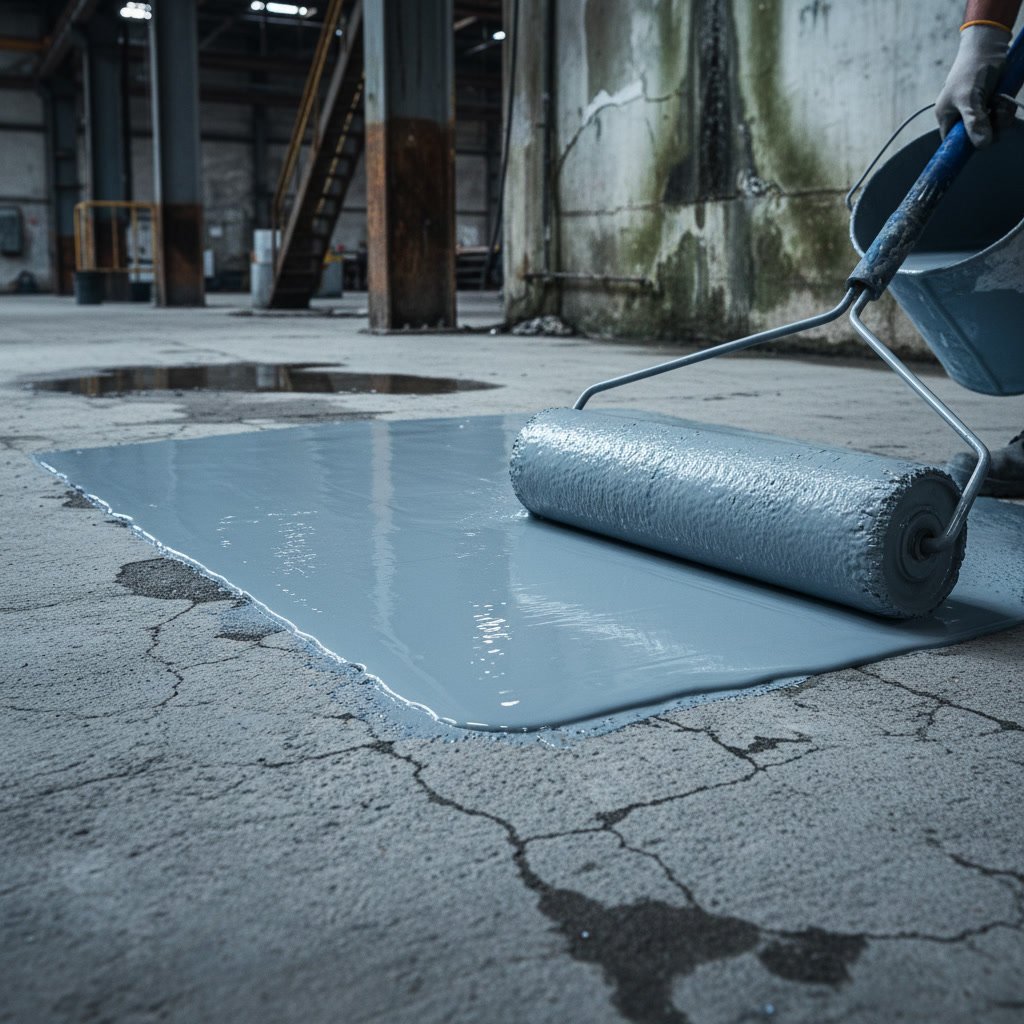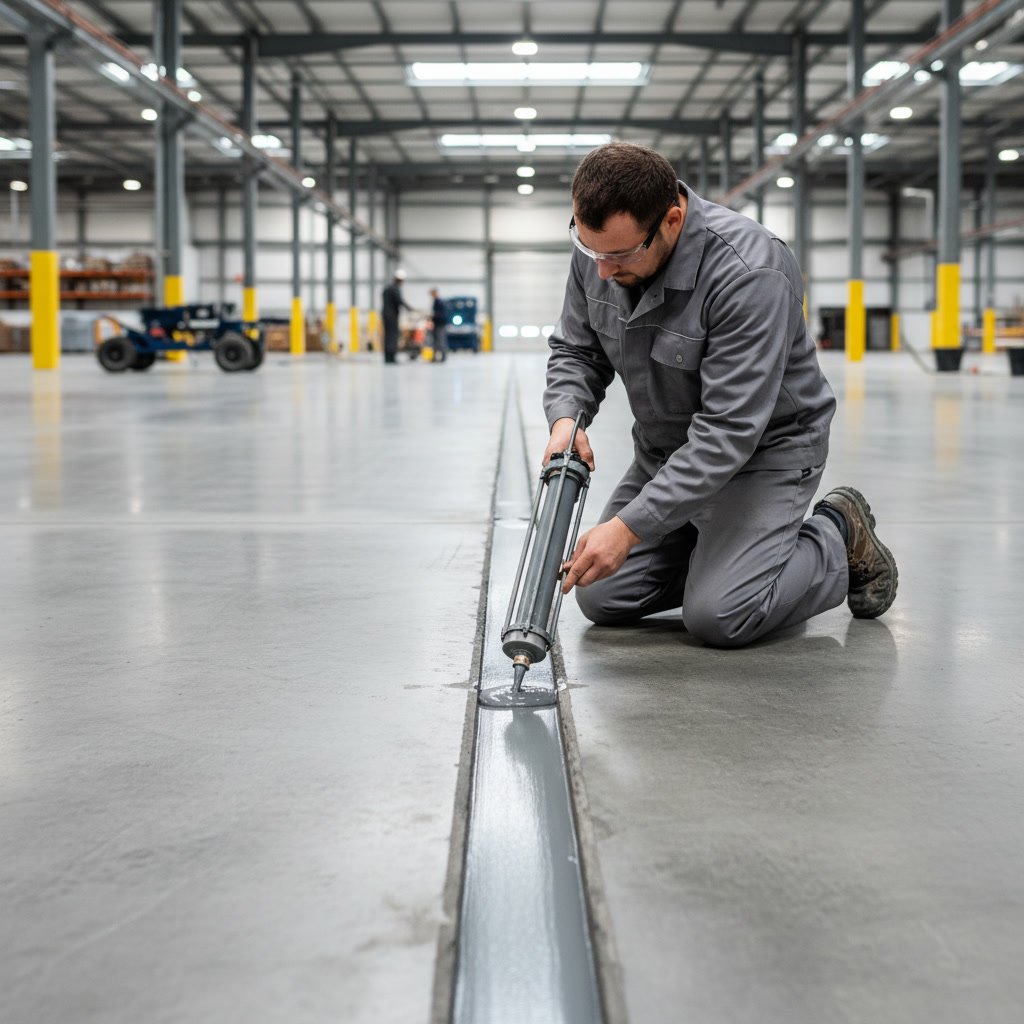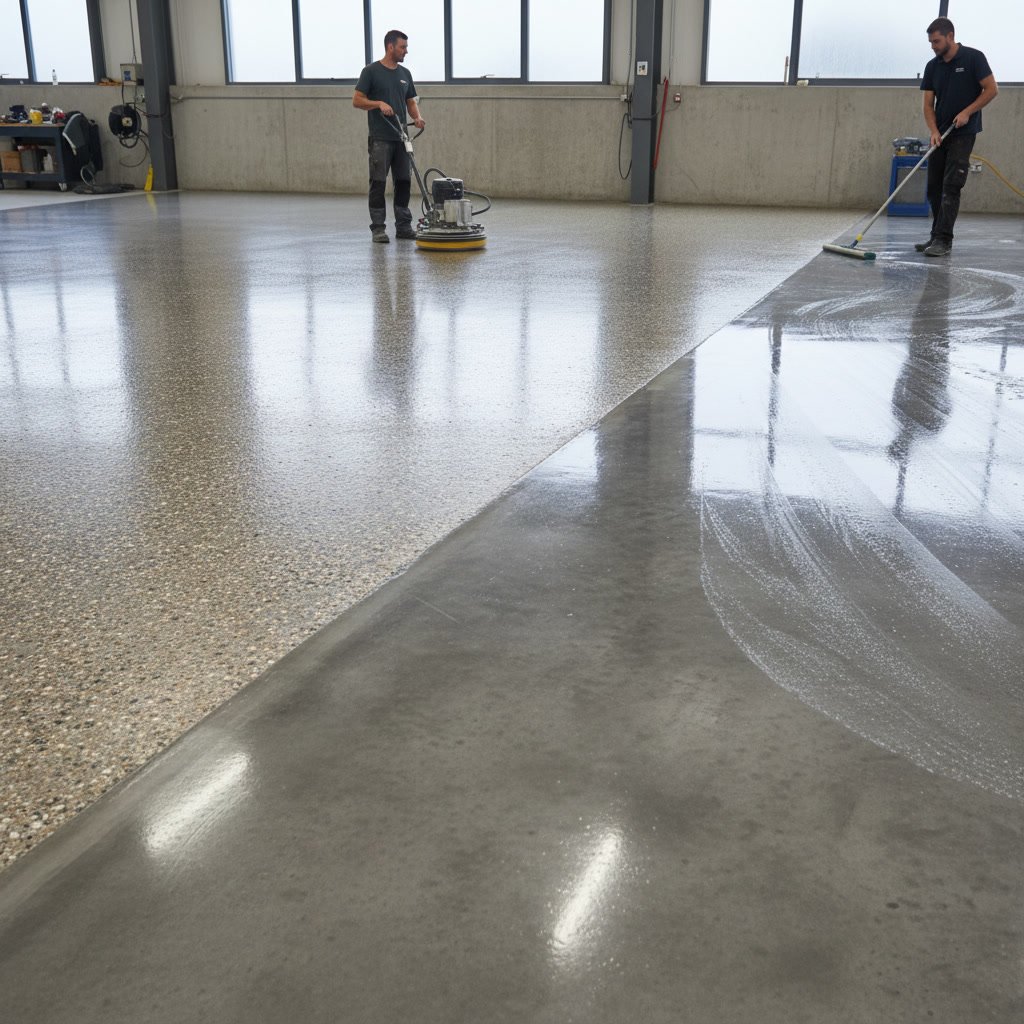
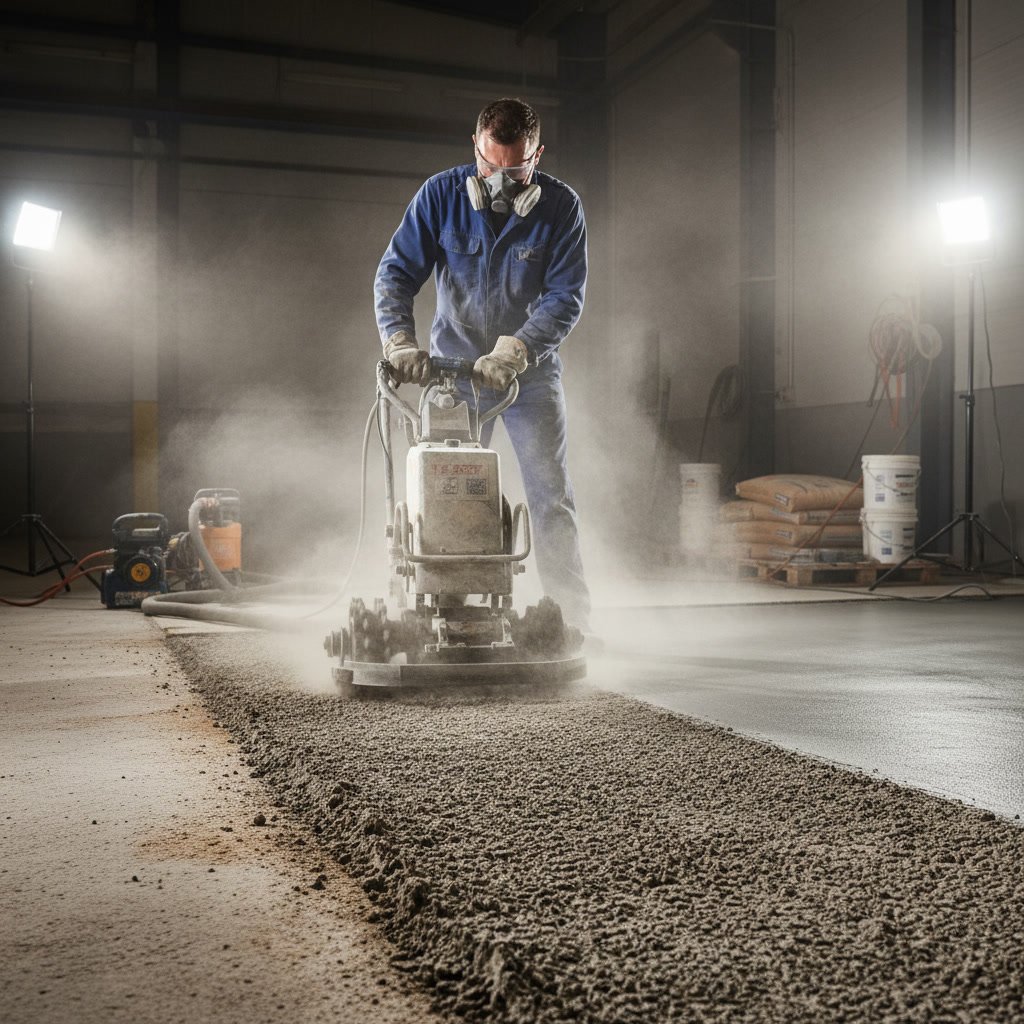
Concrete floor profiling removes surface contaminants and opens the concrete pores to create a specific texture that allows coatings to mechanically lock into the substrate. Without proper profiling, even the highest-quality epoxy or urethane will delaminate within months. The profiling process uses diamond grinding, shot blasting, or scarification to achieve one of ten standardized surface profiles, measured by the International Concrete Repair Institute (ICRI) as CSP-1 through CSP-10, with each number representing increasing depth and roughness required for different coating types.
Why Surface Texture Determines Coating Performance
Coatings adhere to concrete through mechanical bonding rather than chemical adhesion alone. When installers apply epoxy or polyurethane to a smooth, unprepared slab, the coating sits on top of the surface with minimal grip. The microscopic peaks and valleys created during profiling increase the actual bonding surface area by 300 to 800 percent compared to untreated concrete.
Temperature fluctuations, moisture vapor transmission, and foot or vehicle traffic all generate stress at the coating-to-substrate interface. A properly profiled surface distributes these forces across thousands of tiny anchor points. Smooth surfaces concentrate stress in fewer contact areas, leading to adhesion failure that appears as bubbling, peeling, or complete delamination.
The ICRI Surface Profile Scale Explained
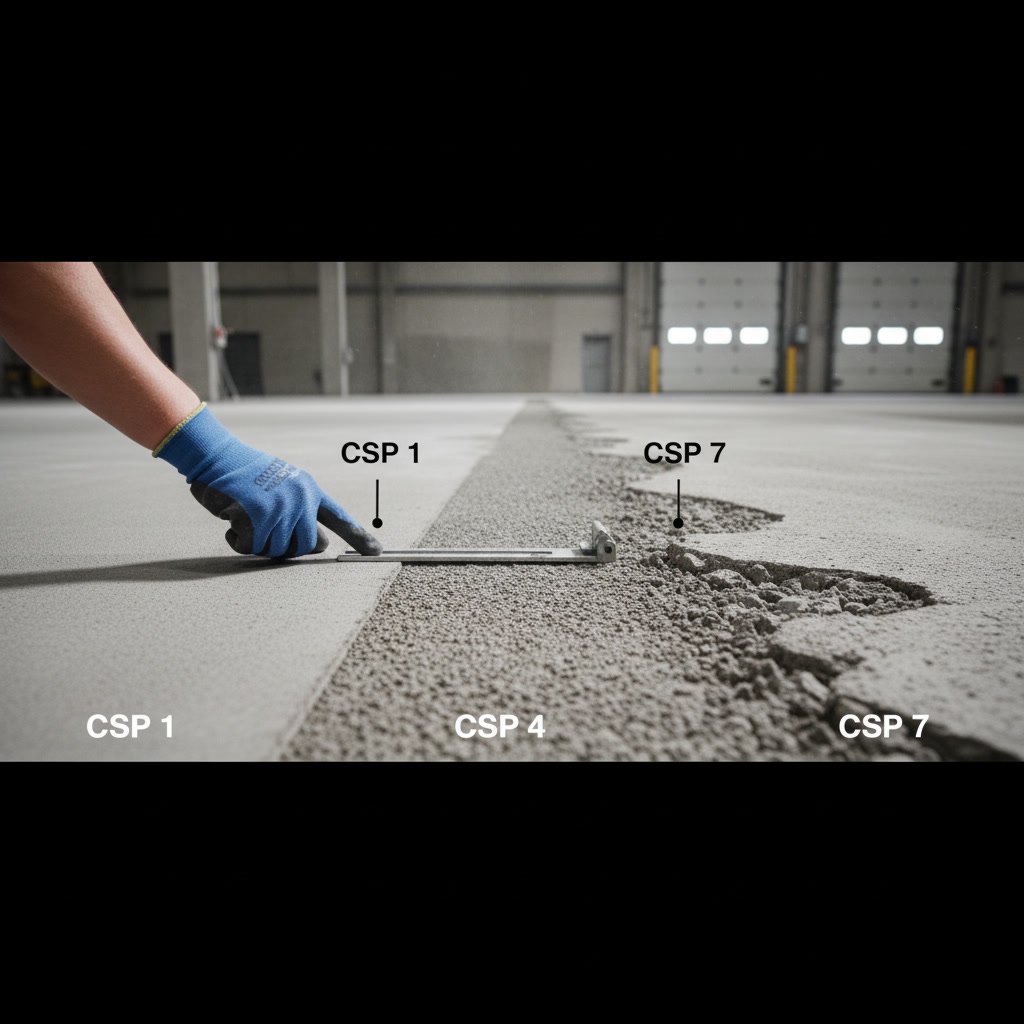
The ICRI developed ten concrete surface profile standards to give installers and specifiers a common language. CSP-1 represents the smoothest profile, comparable to fine sandpaper texture. CSP-10 creates deep, heavy grooves similar to what you would see after heavy scarification. Most commercial coating applications require CSP-2 through CSP-5.
Thin epoxy coatings under 10 mils thick typically need CSP-2 or CSP-3. Thicker build epoxies, urethanes, and self-leveling systems perform best on CSP-4 or CSP-5 profiles. High-build systems exceeding 125 mils may require CSP-6 or higher to prevent coating bridging, where the material spans over valleys without proper contact.
Common Profiling Methods and Their Results
Diamond grinding uses rotating discs embedded with industrial diamonds to remove surface laitance and open pores. This method produces CSP-1 through CSP-3 profiles and works well in occupied spaces because it generates less noise and dust than other methods. The equipment ranges from small hand-held grinders for edges to ride-on planetary grinders for large floor areas.
Shot blasting propels steel or stainless shot at the concrete surface at high velocity. The impact removes coatings, adhesives, and weak surface concrete while creating CSP-3 through CSP-7 profiles depending on shot size and machine settings. This method excels at preparing large industrial floors quickly and creates a more uniform profile than grinding.
Scarification uses carbide-tipped cutters or multi-headed flails to aggressively remove material and create CSP-5 through CSP-10 profiles. Installers reserve this method for heavily contaminated surfaces, deteriorated concrete requiring significant removal, or applications demanding maximum mechanical bond strength such as urethane cement systems.
Profile Requirements for Different Coating Types in Manhattan NY
Thin epoxy sealers and decorative color coatings bond effectively to CSP-2 profiles created through light diamond grinding. These systems typically range from 3 to 8 mils thick when cured. The shallow profile provides adequate mechanical bond without creating voids that thin coatings cannot fill.
Standard epoxy and polyaspartic floor coatings between 10 and 40 mils thick require CSP-3 or CSP-4 profiles. Most commercial and light industrial applications in Manhattan NY and surrounding areas fall into this category. The profile depth matches the coating thickness, ensuring complete contact without air pockets.
Heavy-duty industrial coatings, mortar systems, and self-leveling toppings need CSP-4 through CSP-6 profiles. These products cure to thicknesses between 40 and 250 mils. The deeper profile accommodates the greater coating mass and provides the mechanical strength required to resist forklift traffic, thermal shock, and chemical exposure in demanding environments.
How Moisture and Contaminants Affect Profile Success
Even perfect profiling fails if moisture or contaminants remain in the concrete. Hydrostatic pressure from groundwater or high humidity can force water vapor through the slab, creating blisters under impermeable coatings. Installers must test slabs for moisture vapor emission rates before coating, regardless of profile quality.
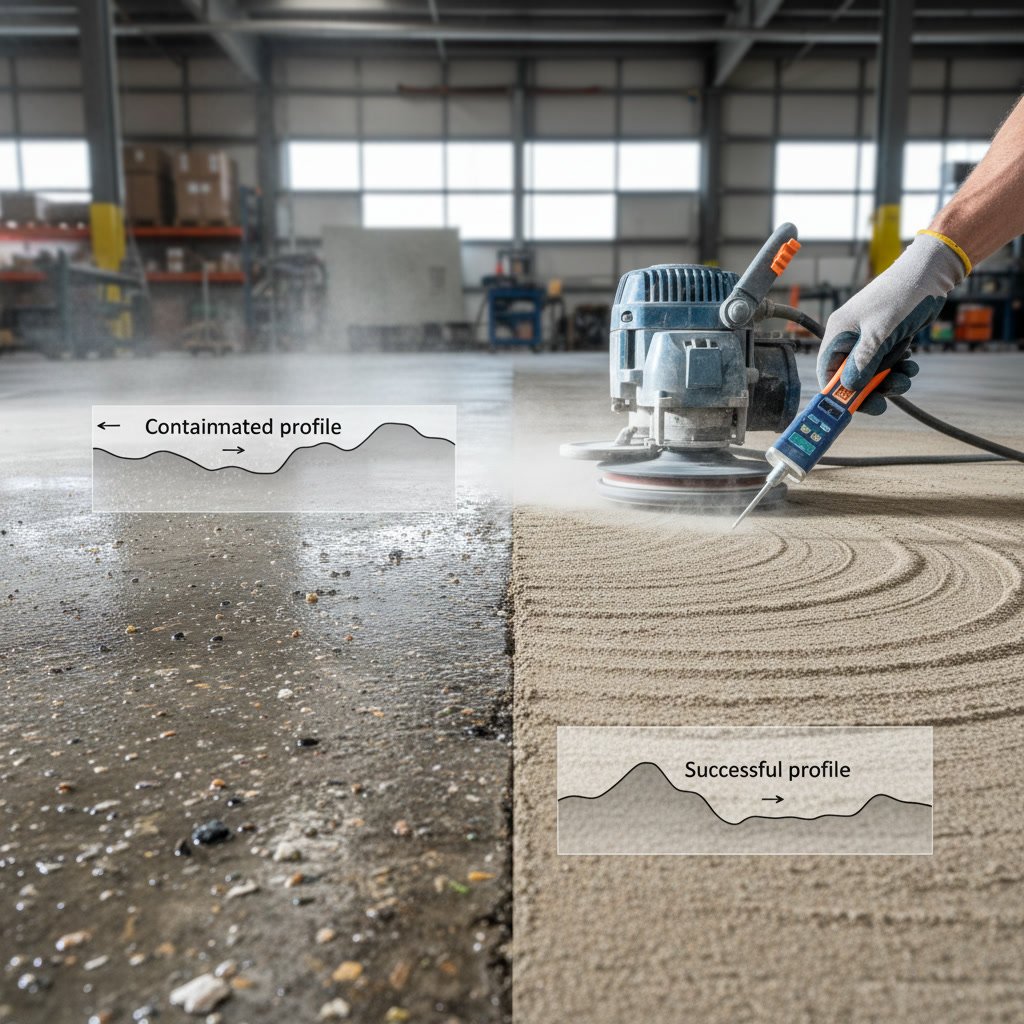
Oil, grease, fuel, and chemical residues penetrate concrete pores during years of use. Surface profiling alone does not remove these contaminants from within the concrete matrix. Deep contamination requires specialty treatments such as concrete floor mastic removal or poultice applications before profiling begins.
Step-by-Step Profile Creation Process
Surface assessment comes first. Installers test concrete hardness using Mohs picks or rebound hammers to select appropriate tooling. They identify existing coatings, adhesives, sealers, or curing compounds that require removal. Moisture testing reveals whether the slab can accept impermeable coatings or needs vapor mitigation.
Gross contamination removal follows assessment. This includes scraping thick coatings, removing carpet or tile, and addressing oil stains. Some projects require complete coating removal before profiling can expose clean concrete. The preparation work often consumes more time than the actual profiling operation.
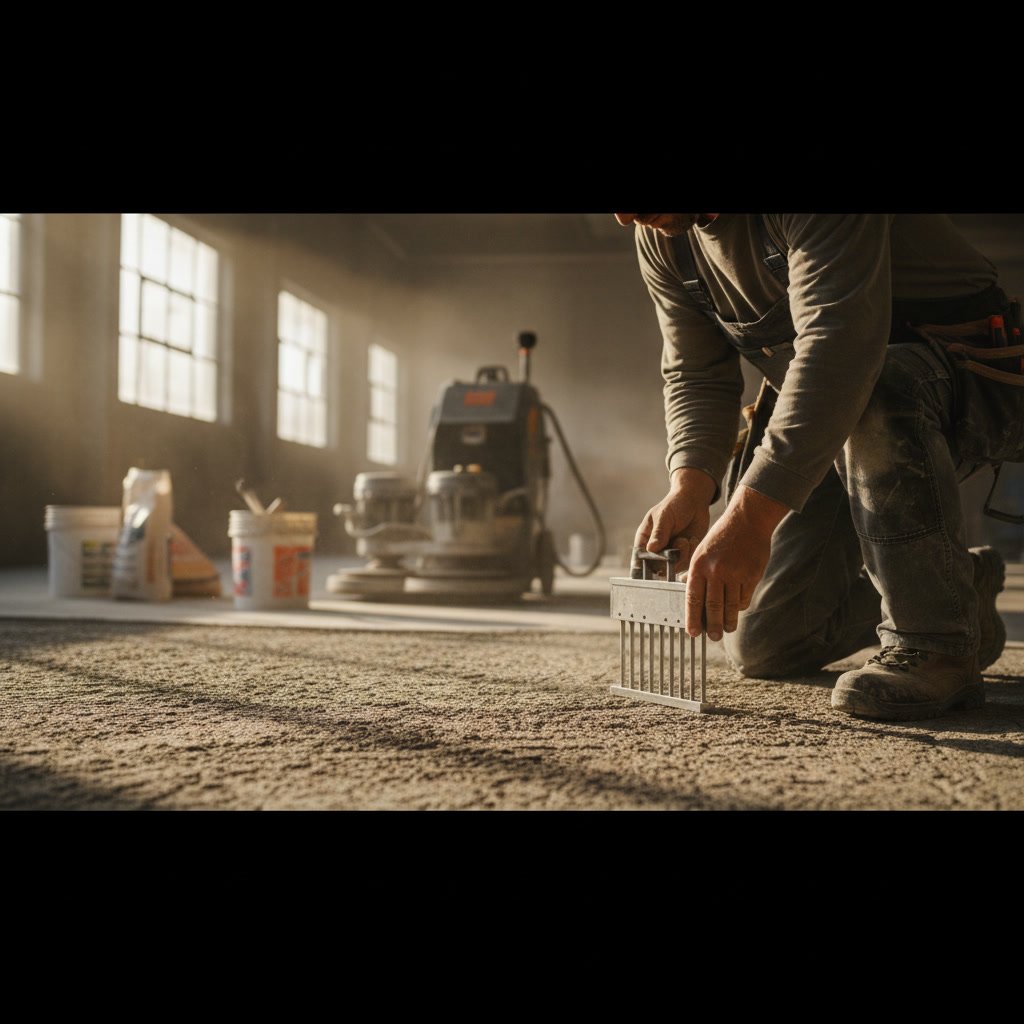
Primary profiling creates the target CSP level across the entire floor. Operators adjust equipment settings, tooling type, and number of passes to achieve consistent results. They monitor progress using ICRI profile chips, which are physical samples cast from actual profiled concrete that installers compare against the prepared surface.
Edge work and detail grinding address areas that large equipment cannot reach. Perimeters, columns, drains, and penetrations require hand-held grinders. These areas must match the main floor profile or coating adhesion will vary across the installation.
Final cleaning removes all dust and debris generated during profiling. Industrial vacuums capture material during grinding or shot blasting, but residual dust settles into the profile. Installers vacuum thoroughly, then wipe or mop with clean water or solvents approved for the specific coating system. The surface must be completely dry before coating begins.
Testing and Verifying Profile Depth
Visual comparison against ICRI profile chips provides quick field verification. Each chip represents one CSP level and includes both a visual reference and a tactile surface to feel. Installers compare chips against multiple areas to ensure uniform preparation across the entire floor.
Depth micrometers and profile gauges measure actual surface roughness in mils or microns. These tools provide quantitative data for quality control documentation and specification compliance. High-value projects or performance-critical applications justify the additional testing expense.
Pull-off adhesion testing verifies that the profile and surface preparation produced adequate bond strength. Technicians glue dollies to coated test areas, allow them to cure, then use calibrated equipment to measure the force required to separate the coating from the concrete. Results below 200 psi indicate preparation problems even when visual inspection shows proper profile depth.
Common Profile Failures and How to Avoid Them
Over-profiling creates a surface too rough for thin coatings to fill. The coating bridges across deep valleys, leaving voids that trap air and moisture. When traffic or temperature changes stress the coating, these voids become delamination points. The solution involves applying a primer or additional coating layer to fill the profile before the final topcoat.
Under-profiling leaves the surface too smooth for adequate mechanical bond. This typically happens when contractors try to save time or avoid dust by skipping proper grinding steps. The coating may look acceptable initially but fails within months as normal use breaks the weak bond. There is no fix except removing the failed coating and starting over with proper preparation.
Inconsistent profiling creates strong adhesion in some areas and weak bonds in others. Variations occur when operators overlap passes incorrectly, change equipment settings mid-project, or fail to prepare edges to match the main floor. Coating failure follows the least prepared areas rather than the properly profiled sections.
How Profile Choice Affects Long-Term Coating Durability
Proper profile selection based on coating type and service environment determines whether installations last five years or 25 years. Installers who understand profile requirements rarely experience premature failures. Those who guess or skip specification review see callbacks and warranty claims.
Environmental factors influence ideal profile depth beyond coating thickness alone. Chemical exposure requires deeper profiles that allow thicker, more resistant coatings. Thermal cycling from freezers, kitchens, or outdoor areas benefits from profiles that accommodate expansion and contraction without breaking the coating bond. High moisture environments may require profiles that work with vapor-tolerant primers or moisture mitigation systems.
The relationship between surface preparation quality and coating longevity appears in industry data. Studies show that 80 percent of coating failures trace back to inadequate surface preparation rather than coating defects. Proper profiling represents the single most important factor in installation success. Understanding this connection between epoxy flooring adhesion and concrete surface profiles helps explain why preparation should never be rushed or compromised.
Specialized Applications Requiring Custom Profiles
Food processing facilities and commercial kitchens often specify antimicrobial epoxy or urethane systems over CSP-4 or CSP-5 profiles. These environments combine chemical exposure from cleaning agents, thermal stress from steam and refrigeration, and moisture from constant washing. The aggressive profile supports thick, seamless coatings that meet USDA and FDA sanitation standards.
Pharmaceutical laboratories require coatings that resist specific chemicals while maintaining clean room standards. Profile specifications account for coating build, chemical resistance requirements, and the need for cove base installation that creates seamless floor-to-wall transitions. CSP-3 or CSP-4 profiles typically support the thin-to-medium build epoxy systems specified for these applications.
Professional Preparation Delivers Lasting Results
Matching surface profile to coating requirements separates successful installations from premature failures. The concrete surface must provide enough texture for mechanical bonding without creating voids that coatings cannot fill. Proper testing, equipment selection, and execution ensure the profile supports coating adhesion for the full service life.
Alliance Epoxy Flooring Corp brings specialized profiling expertise to commercial and industrial projects throughout the region. Our team selects appropriate preparation methods, achieves specified CSP levels, and verifies results through testing before coating application begins. Whether your facility needs light grinding for decorative systems or aggressive scarification for heavy-duty industrial coatings, proper surface preparation creates the foundation for floors that perform as designed. Contact our team at +18005189080 to discuss your project requirements and schedule a site evaluation.