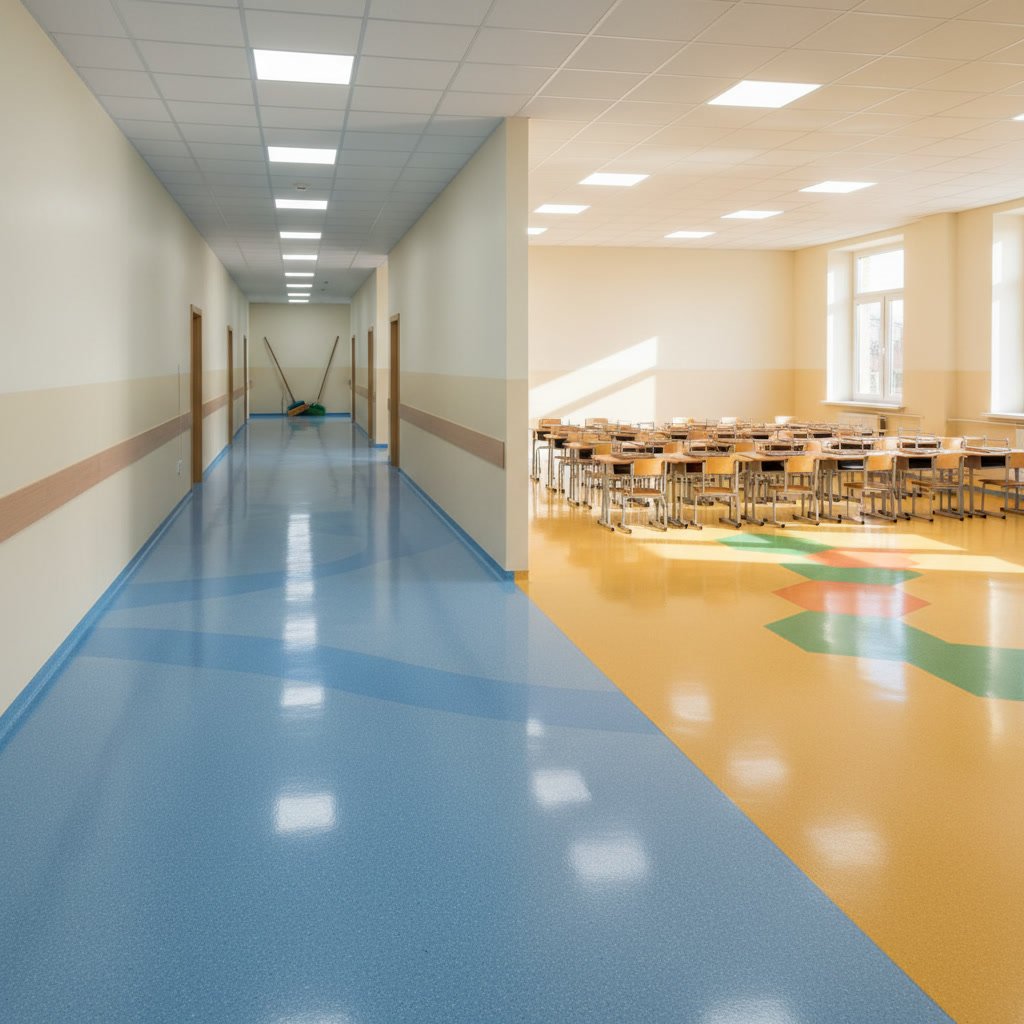
Epoxy flooring for schools provides a seamless, durable surface that withstands thousands of daily footsteps, rolling backpacks, and frequent cleaning without cracking or wearing down. Educational facilities require floors that balance long-term performance with safety, hygiene, and budget constraints. A properly installed epoxy system creates a chemical bond with the concrete substrate, forming a unified surface that resists impact, moisture, and stains while maintaining a clean appearance throughout the academic year.
Why Traditional Flooring Options Struggle in Educational Settings
Vinyl composite tile (VCT) requires waxing and buffing every few months to maintain appearance, creating maintenance costs that accumulate over a school’s lifetime. Wax layers trap dirt and require stripping with harsh chemicals, taking classrooms and hallways out of use during treatment. Ceramic tile develops cracks at grout lines under repeated impact from dropped equipment, and those grout lines harbor bacteria even with regular mopping.
Carpet in classroom spaces absorbs spills, collects allergens, and shows wear patterns within two to three years in high-traffic zones. These materials also create seams and edges where moisture can penetrate to the concrete below, leading to substrate damage that requires expensive repairs. School administrators often find themselves choosing between constant maintenance or premature replacement.
The Chemistry Behind Epoxy Durability
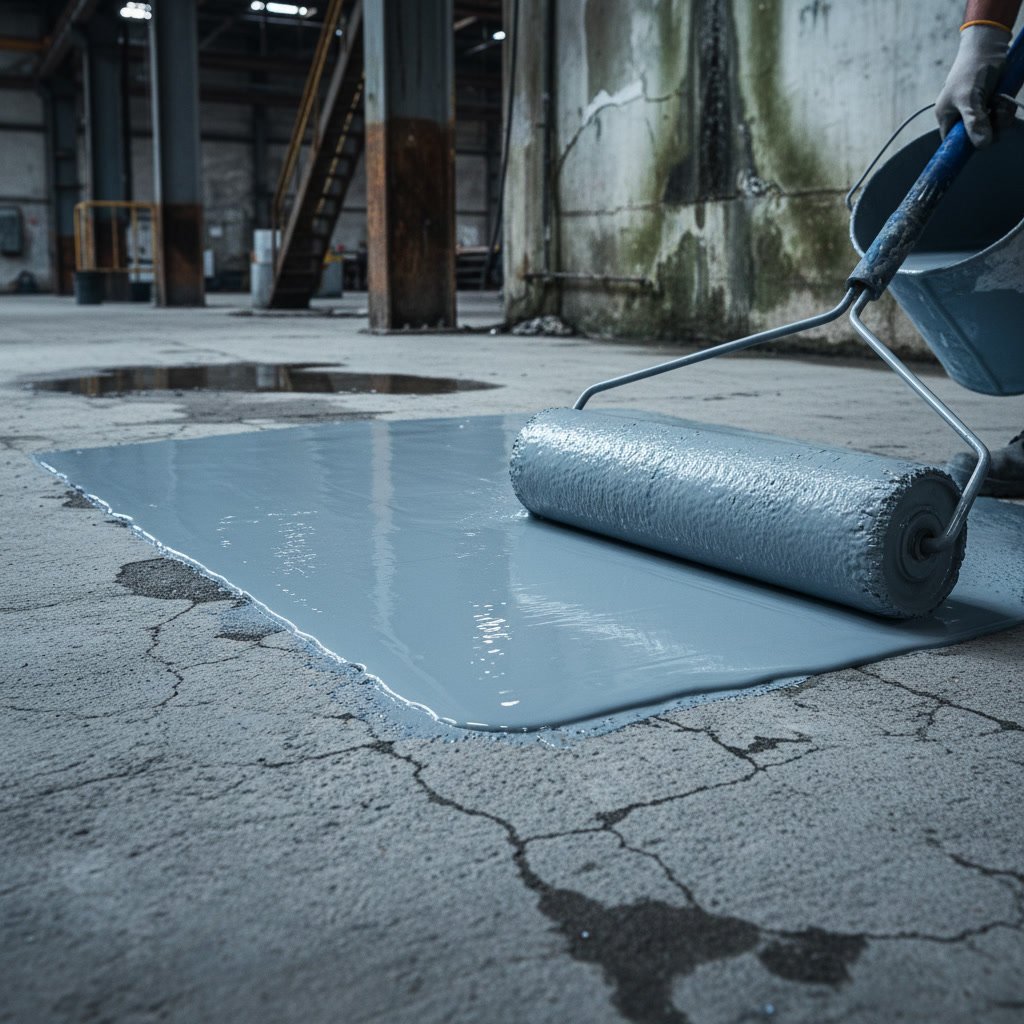
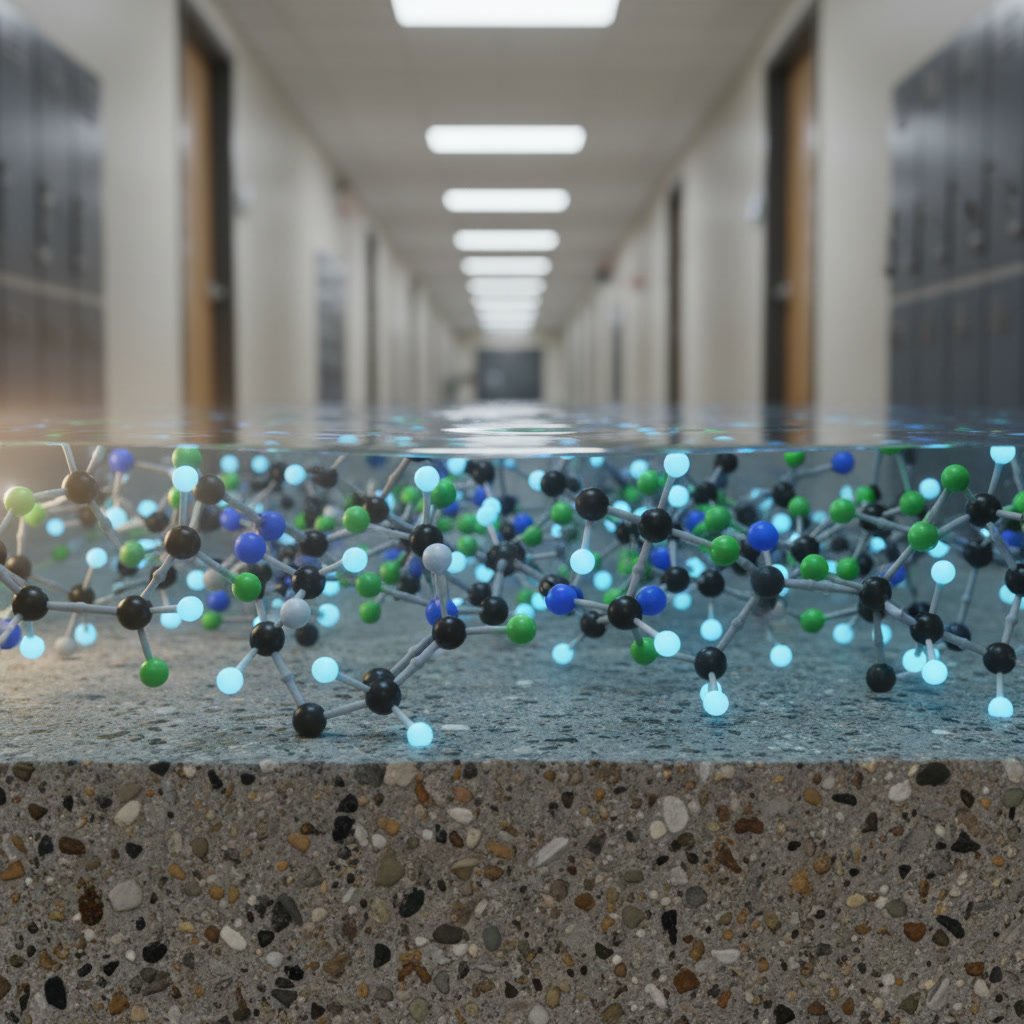
Epoxy systems consist of two components that chemically react when mixed. The resin and hardener undergo an exothermic reaction that creates cross-linked polymer chains, forming a rigid, dense surface that penetrates into properly prepared concrete. This molecular bonding creates a wear layer that doesn’t simply sit on top of the substrate but becomes part of the floor structure itself.
The resulting surface achieves compressive strengths exceeding 10,000 psi and tensile strengths around 3,000 psi, meaning it can handle the concentrated loads from desks, storage cabinets, and rolling carts without denting or cracking. Chemical resistance prevents damage from cleaning solutions, science lab spills, and art room solvents. This performance level remains consistent for 15 to 20 years in school environments when installed correctly over properly prepared concrete.
Surface Preparation Requirements for Long-Term Performance
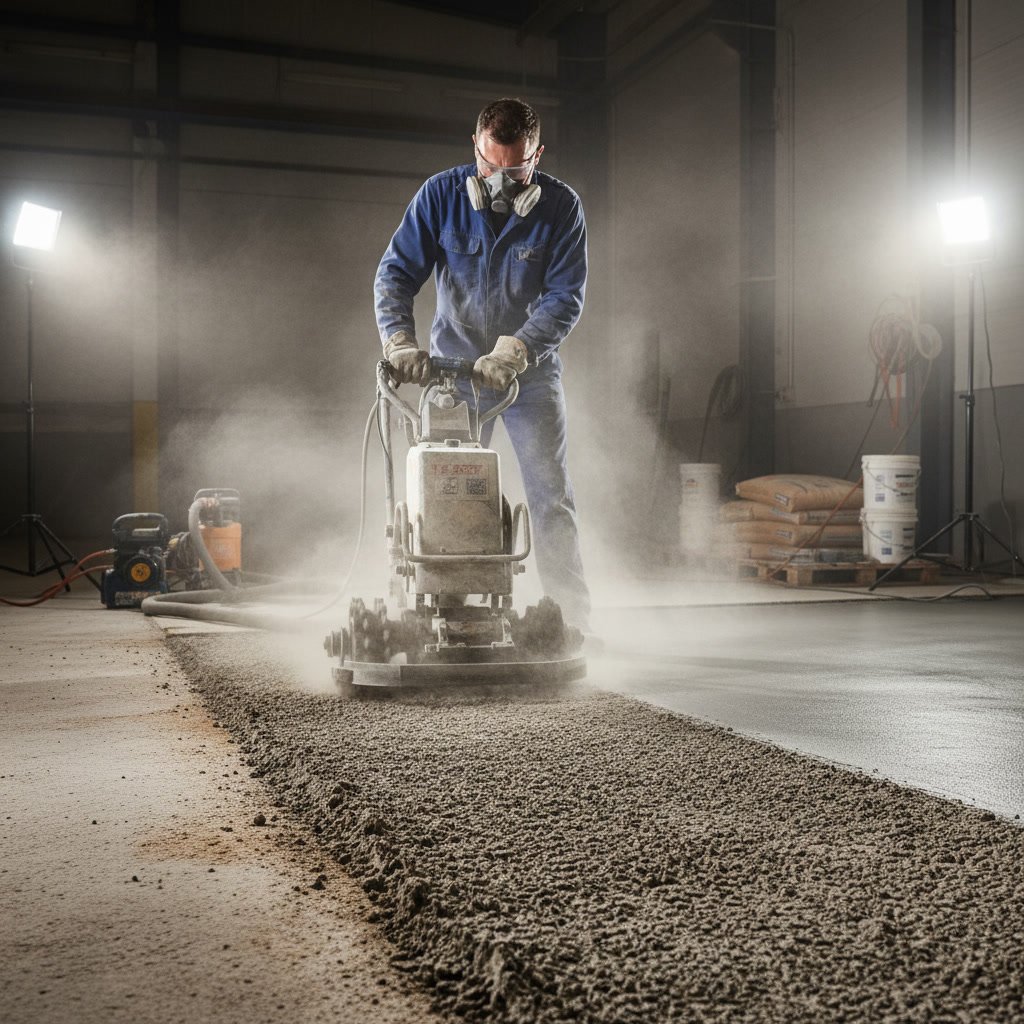
The concrete substrate must be cleaned, profiled, and dried to specific standards before epoxy application. Any existing coatings, adhesives, or contaminants block the chemical bond between epoxy and concrete. Professional concrete grinding creates the surface profile necessary for mechanical adhesion, typically a CSP-2 or CSP-3 rating depending on the specific epoxy system.
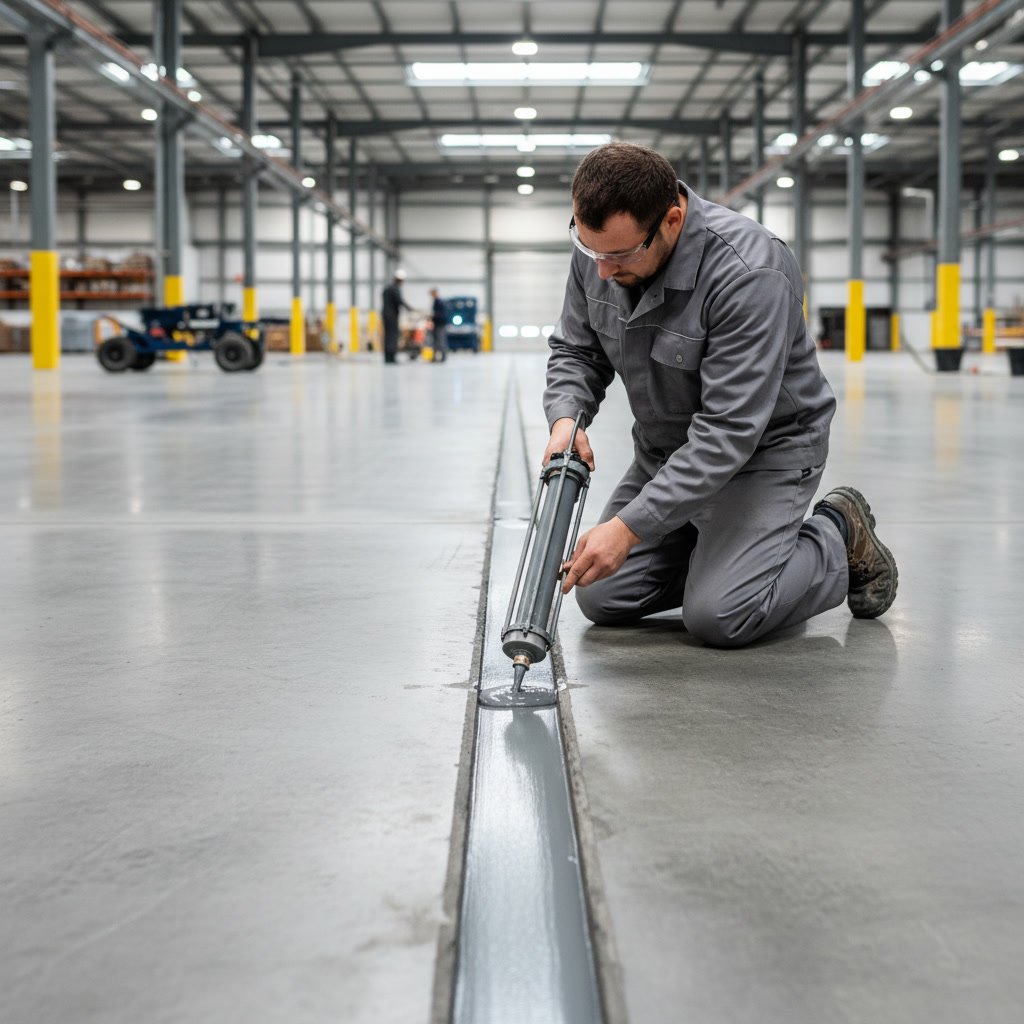
Moisture testing confirms the slab is dry enough to accept epoxy without delamination risk. Calcium chloride tests or relative humidity probes measure moisture vapor emission rates, which must stay below manufacturer specifications. Cracks and control joints require filling to prevent telegraph cracking through the new surface. Many schools schedule this preparation work during summer breaks to avoid disrupting classes.
Slip Resistance and Safety Standards in Educational Facilities
Smooth epoxy surfaces can become slippery when wet, creating liability concerns in hallways near water fountains and entrances. Adding aggregate materials to the topcoat creates texture that increases the coefficient of friction. Aluminum oxide, silica sand, or polymer grit can be broadcast into the final coat at varying densities to achieve specific slip resistance ratings.
ADA guidelines and ANSI A326.3 standards recommend a wet Dynamic Coefficient of Friction (DCOF) of 0.42 or higher for level surfaces. Schools should specify this rating for hallways, restrooms, and any area subject to wet cleaning. The texture level needs to balance traction with ease of cleaning, as overly rough surfaces trap dirt and become harder to maintain. A fine to medium aggregate broadcast typically provides adequate slip resistance while allowing dust mops and auto-scrubbers to work effectively.
Color Options and Wayfinding Applications
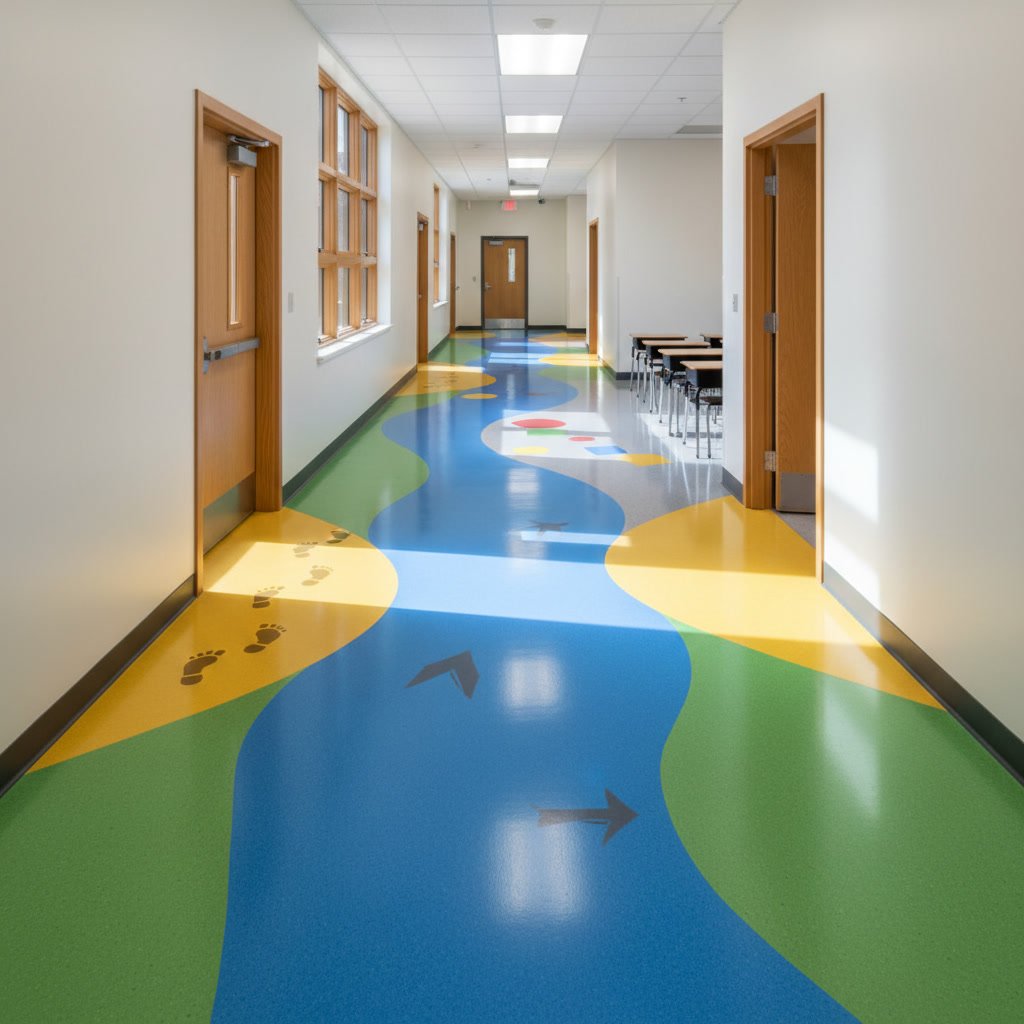
Unlike tile or VCT that come in preset color palettes, color coatings in epoxy systems can be custom-tinted to match school colors, create department zones, or establish visual pathways. Elementary schools often use bright colors in different wings to help younger students navigate the building. High schools may designate specific floor colors for academic versus athletic areas.
Color coding serves functional purposes beyond aesthetics. Hospitals use this strategy to reduce wayfinding confusion, and the same principle applies in large school complexes. Colored epoxy lines or borders can mark safe walkways in shop classes, designate quiet zones near testing rooms, or highlight emergency exit routes. These visual cues remain vibrant because the pigment is mixed throughout the coating thickness rather than printed on a surface layer that can wear away.
Installation Timeline and School Schedule Coordination
A typical classroom or hallway section requires three to five days for complete installation, from surface preparation through final cure. Concrete grinding and crack repair take one day. Primer application and cure time add another day. Base coat and topcoat applications with cure periods complete the sequence. Schools in Manhattan NY and surrounding areas often schedule installations during winter, spring, or summer breaks to avoid displacing classes.
Fast-cure systems using polyaspartic coating technology can reduce installation time to 24 to 48 hours, allowing work during long weekends. These rapid-cure options cost more per square foot but minimize disruption. Temperature and humidity during installation affect cure times, so climate-controlled environments work best. Adequate ventilation removes solvent odors during application, which matters in occupied buildings where adjacent classrooms remain in use.
Maintenance Requirements and Life Cycle Costs
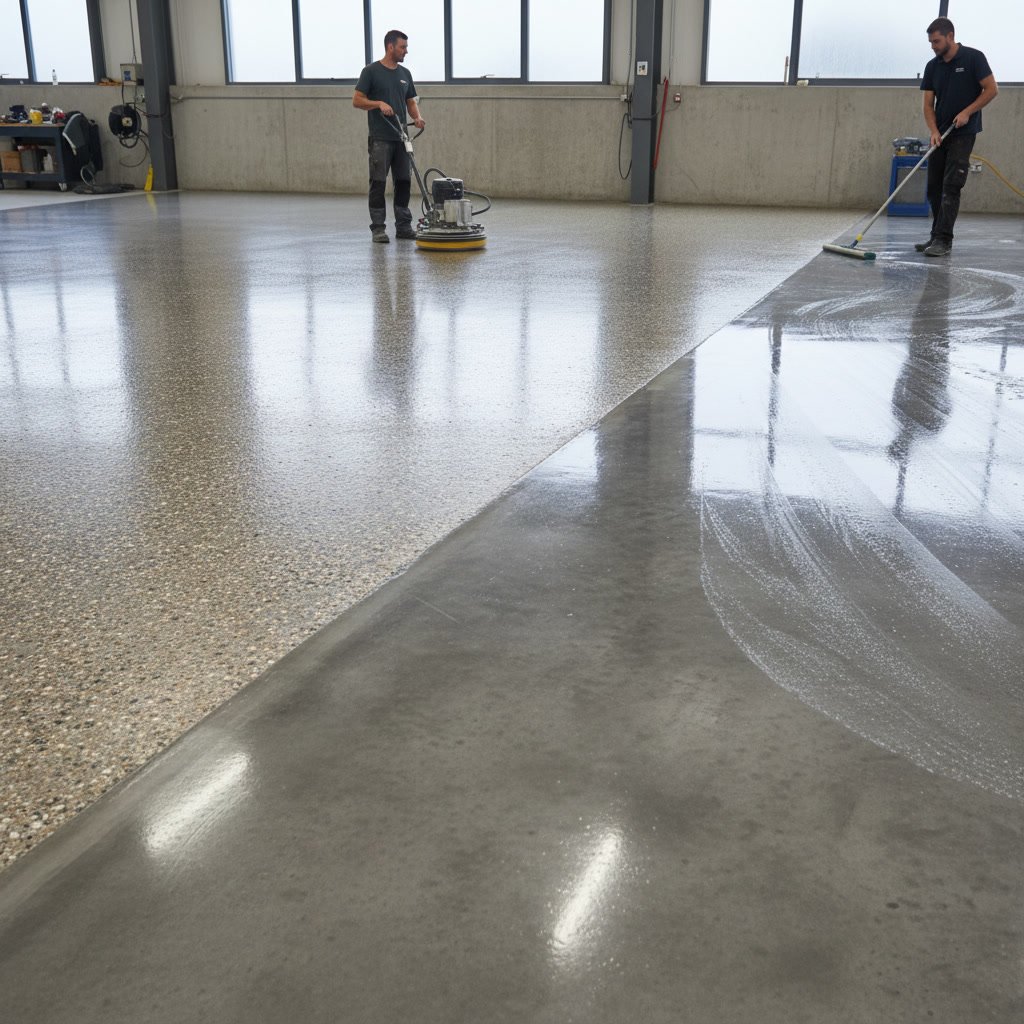
Daily maintenance involves dust mopping or vacuuming to remove abrasive particles. Weekly damp mopping with pH-neutral cleaners removes tracked-in dirt and maintains appearance. Unlike VCT, epoxy requires no waxing, stripping, or buffing. Custodial staff can clean epoxy floors in half the time compared to traditional materials, reducing labor costs significantly over a 20-year period.
Minor scratches from furniture legs or dropped equipment typically don’t penetrate through the coating thickness. When wear does appear after years of use, a thin topcoat reapplication restores the surface without removing the existing system. This maintenance approach costs approximately 10 to 15 percent of new installation and extends floor life another decade. Calculating total cost of ownership rather than initial installation price shows epoxy systems often cost less than VCT or tile over a 30-year building lifecycle.
Impact Resistance in High Traffic School Areas
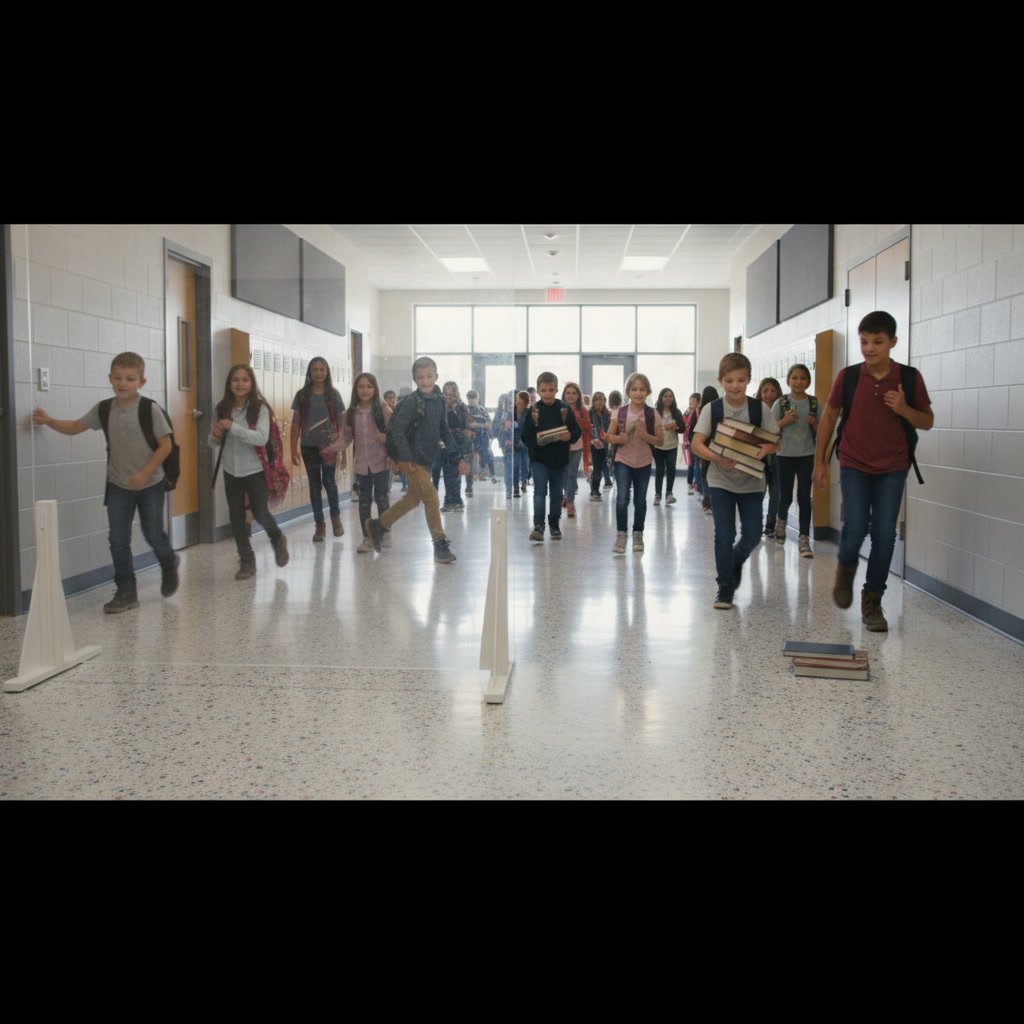
Hallways, cafeterias, and gymnasium entrances experience concentrated traffic during class changes, with hundreds of students moving through narrow corridors within five-minute windows. Dropped textbooks, musical instruments, and sports equipment create point-load impacts that crack ceramic tile and dent softer flooring. Epoxy’s flexibility allows it to absorb these impacts without surface damage.
The coating’s impact resistance depends on both the epoxy formulation and substrate quality. A brittle concrete slab will crack regardless of the coating applied. This is why proper concrete repair, including filling control joints and structural cracks, matters before installation. Industrial floors in warehouses and manufacturing plants face similar demands and use comparable epoxy systems, proving the material’s performance under extreme conditions.
Hygienic Properties for Health and Safety
Seamless epoxy surfaces eliminate grout lines, seams, and gaps where bacteria, mold, and allergens accumulate. This matters especially in school environments where illness spreads quickly among children in close contact. The non-porous surface prevents moisture absorption, so spilled liquids stay on the surface where they can be wiped up immediately.
Restrooms, locker rooms, and food service areas benefit most from epoxy’s hygienic properties. Adding antimicrobial additives to the coating provides additional protection, though regular cleaning remains the primary defense against pathogen transmission. The ability to thoroughly clean and disinfect floors became particularly important during recent health crises, and many schools now prioritize materials that support rigorous sanitation protocols without degrading.
Environmental Considerations and Indoor Air Quality
Low-VOC and zero-VOC epoxy formulations minimize off-gassing during and after installation. Schools seeking LEED certification or following green building standards should specify these products. While standard epoxy systems emit noticeable odors during application, newer water-based formulations reduce this concern significantly.
Epoxy’s long service life also contributes to environmental goals by reducing the frequency of material replacement. Fewer demolition and installation cycles mean less construction waste entering landfills and lower embodied carbon over the building’s lifetime. Some epoxy products incorporate recycled content or bio-based resins, though performance characteristics should take priority over environmental claims alone. Similar considerations apply when comparing types of industrial floor coatings for warehouses and commercial spaces.
Partnering with an Experienced Installation Team
The difference between a floor that performs for 20 years and one that fails within five often comes down to installation quality rather than product selection. Alliance Epoxy Flooring Corp brings specialized knowledge of substrate preparation, moisture mitigation, and coating application that determines long-term success. Educational facilities require contractors who understand the unique timing constraints, safety protocols, and performance demands of school environments.
Proper installation begins with thorough site assessment and moisture testing, continues through methodical surface preparation and multi-coat application, and concludes with detailed curing procedures that ensure the coating reaches full strength. Experienced contractors also understand how to work around school schedules, coordinate with facilities staff, and complete projects within narrow installation windows. Selecting a qualified installer protects your investment and ensures students and staff benefit from a floor system that performs as promised.
Alliance Epoxy Flooring Corp specializes in educational facility flooring throughout the New York area, delivering durable epoxy flooring solutions designed for the demanding conditions schools face daily. Our team works directly with administrators and facilities managers to schedule installations that minimize disruption while maximizing floor performance and longevity. Contact us at +18005189080 to discuss how epoxy flooring can improve safety, reduce maintenance costs, and create learning environments that serve your community for decades.